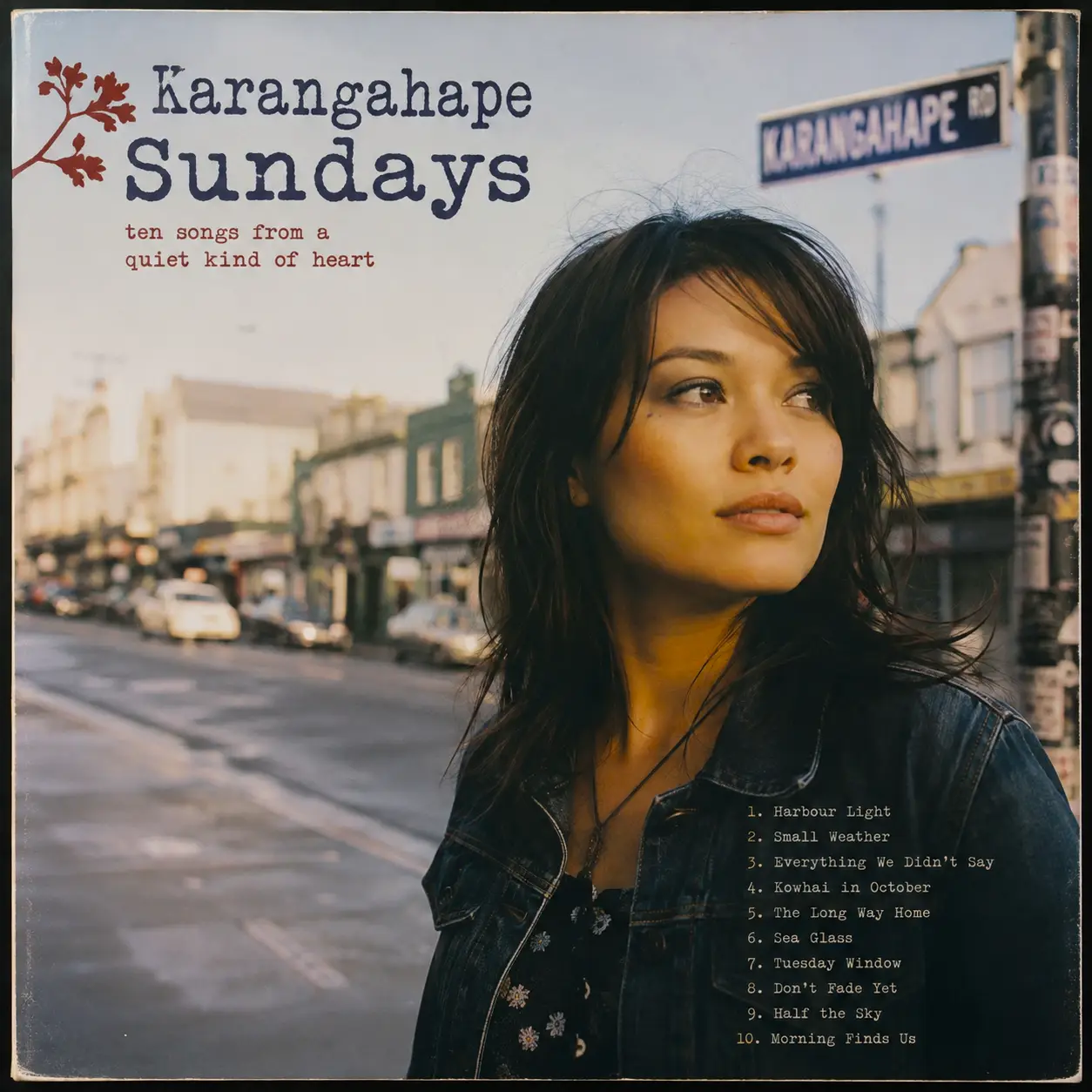
AI Process/Open Source Software: HUMAN, Google Flow Music (Lyria 3.5), Claude.ai, ChatGPT, Perchance.org – DAW: Audacity 4 (alpha), OS: Linux (Ubuntu 26.04)
Full Album (52:32)
Text to Music Prompt
Jangly, melodic Kiwi pop-rock, in the tradition of early-1980s New Zealand new wave through 1990s alternative pop. Bright, chiming clean electric guitars playing arpeggiated or strummed chord patterns, occasionally doubled with a warmer acoustic guitar layer. Confident, driving mid-tempo drums, tight but not aggressive, with a strong emphasis on the backbeat. Melodic, prominent bassline that moves rather than just holds root notes. Clean, radio-ready production, polished but warm, not overly compressed or synthetic. Major-key, anthemic chorus melodies with an emotionally direct but slightly wistful undertone, bittersweet rather than purely upbeat. Occasional subtle keyboard or organ pad filling out the mid-range. Understated dynamics, the song builds through arrangement and vocal conviction rather than volume or distortion. Overall mood: earnest, warm, gently melancholic but hopeful, unpretentious pop songcraft with real emotional weight beneath a deceptively simple surface.
Vocal Stylings
- Clear, melodic lead vocal, sung with sincerity rather than vocal acrobatics or belting
- Slight vulnerability or plaintive quality even on upbeat material, emotion delivered through restraint, not power
- Strong, hook-driven melodic phrasing, vocal lines that are instantly singable
- Layered backing harmonies on choruses, often close/tight and warm rather than gospel-big
- Diction is clean and intelligible, lyrics are meant to be understood, not obscured by style
- A conversational, almost plainspoken delivery on verses that opens up emotionally into the chorus
Lyrical Themes
- Longing and emotional distance, missed connections, people drifting apart, unspoken feelings
- Resilience through hardship, quietly hopeful “keep going” sentiments rather than triumphant anthems
- Domestic/personal imagery, everyday details (rooms, weather, small gestures) used to carry big emotions
- Bittersweet nostalgia, reflecting on relationships or times past without full resolution
- Interpersonal reassurance, a recurring “I’ve got you” / “don’t give up” register, direct address to a specific “you”
- Self-doubt tempered by hope, vulnerability paired with a stubborn, understated optimism
- Plainspoken metaphor, reaching for accessible, natural imagery (weather, light, tides) rather than abstract or literary language
Authentic Production/Sound Characteristics
- Guitar-forward mix with guitars and vocals sitting up front, rhythm section supportive rather than dominant
- Warm analog-leaning tones even in digitally recorded eras, not harsh or brittle
- Light-to-moderate reverb, used for space rather than atmosphere-drenching
- Clean-channel electric guitar tones (think Rickenbacker/Telecaster jangle) rather than heavy distortion or fuzz
- Occasional use of organ or Wurlitzer-style keys for texture, kept low in the mix
- Dynamic range preserved, verses noticeably quieter/sparser than choruses
- Song structures are classic pop form: verse-chorus-verse-chorus-bridge-chorus, rarely experimental or sprawling
- Tempo generally mid-range (around 100–130 BPM), rarely frantic, rarely a ballad-crawl