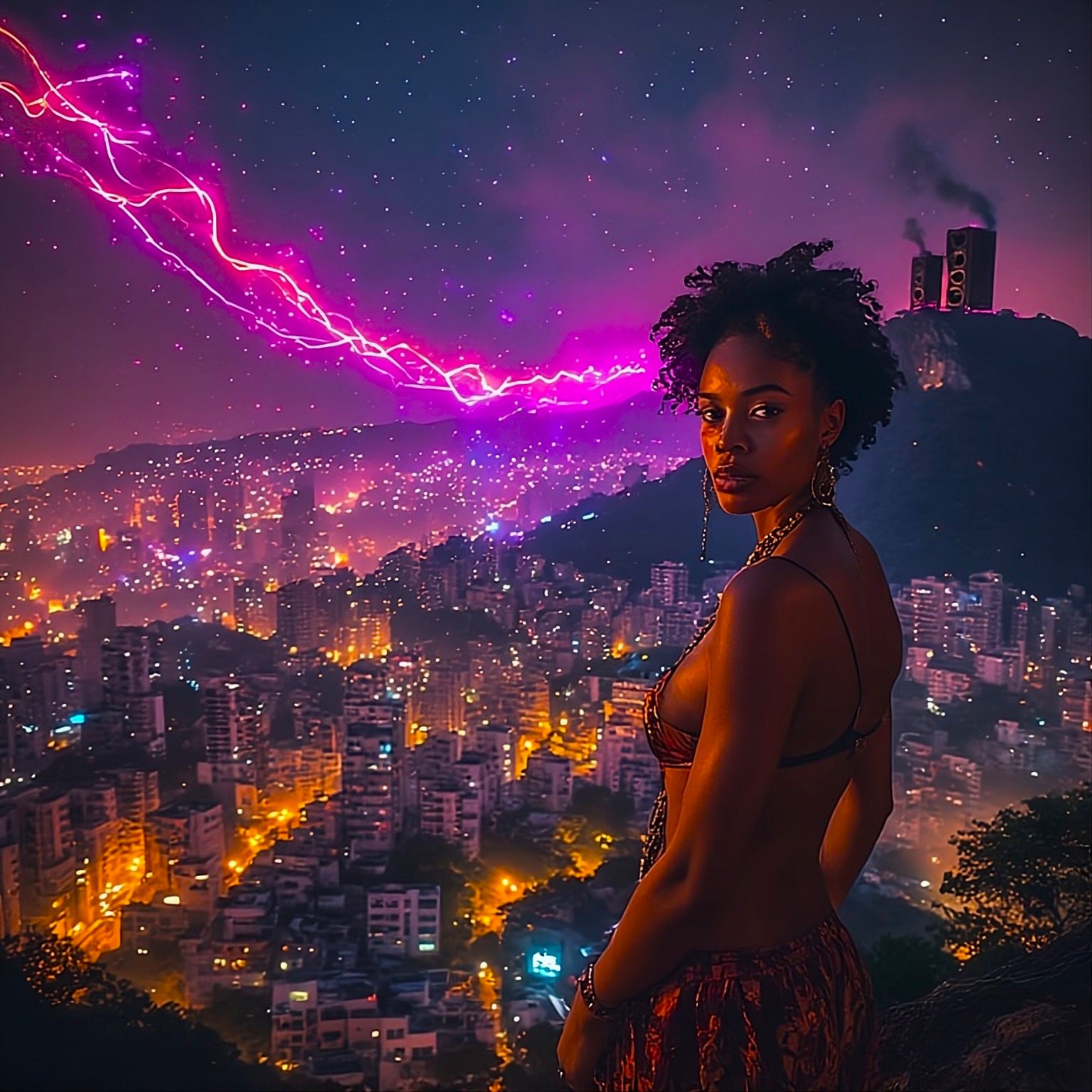
AI Gen Process/Software: Human, ChatGPT.com, Meta.ai, Producer.ai, DAW: Audacity 3.7.5, OS: Linux (Ubuntu 25.04)
Fogo da Favela – Full Album (1:01:25)
Free Downloads: Album MP3 (320 kbps) – Narrative Adaptation (PDF)
From Beats To Battles, A Young Woman’s Journey Transforms Music Into Fire, Defiance, And Hope In The Heart Of The Favela
“A favela não é o problema. A favela é a cidade. A favela é a solução.”
— Marielle Franco
Podcast do Google: Baile Funk: Identidade, Resistência e o Fogo da Favela na Voz da MC Maré
Fogo da Favela: The Sound, The Struggle, The Story
Introduction: In the pulse of Rio de Janeiro’s hills, Baile Funk becomes more than music — it is a language of survival, resistance, and identity. This article explores five interlocking subtopics that illustrate the world crafted in the attached album: (1) the cultural roots and evolution of Baile Funk, (2) the personal arc of Lia / Maré and the role of female and transgender artists, (3) the relationship between baile parties and state violence, (4) the baile as community sanctuary and a site of collective action, and (5) the musical textures and DIY production that make this sound distinct. Each subtopic is treated in depth to show how rhythm, story, and politics fuse in the favela and on the record. By tracing these threads, the piece demonstrates how a local sound becomes a national — and global — voice for dignity and change.
Cultural Roots And Evolution Of Baile Funk
Baile Funk emerged from a hybrid of global bass traditions and local street culture, transforming imported rhythms into a distinctly carioca voice. Its sonic foundation draws heavily from Miami bass, African rhythms, and Brazilian percussion, but the scene adapted these elements to tell stories of the hills — hunger, celebration, and survival. Over decades, baile evolved from clandestine street parties to a recognized cultural movement, even as it remained controversial in mainstream media and politics. The genre’s DIY ethos meant that producers and MCs learned performance, recording, and distribution by necessity, often using pirated CDs and phone recordings to circulate their work. As a result, Baile Funk is both vernacular and innovative: it speaks the language of the favela while experimenting with production techniques that challenge industry norms.
Because baile originates in neighborhood gatherings, it has always reflected local social dynamics — alliances, rivalries, and collective memory. The rhythms function as conversational markers: a certain drum pattern can call a crowd to dance, announce a rival, or signal mourning. That polyvalence helped Baile Funk become a toolkit for social commentary; artists encode critique and aspiration into cadences that travel faster than formal channels. Moreover, the scene’s visual and performative elements — graffiti, makeshift stages, and improvised lighting — created a distinct aesthetic that both resists and repurposes urban neglect. In this way, Baile Funk is not merely entertainment but an adaptive form of cultural survival.
Finally, the evolution of Baile Funk mirrors shifts in technology and migration: as mobile phones, streaming, and diasporic networks expanded, so did baile’s reach. International listeners discovered the urgency and inventiveness of favela artists, and collaborations broadened the genre’s palette. Yet global exposure also brought scrutiny and commercialization, forcing artists to navigate new pressures while defending their roots. This tension — between local authenticity and wider recognition — is central to understanding the sound and the stories it carries.
Lia / Maré: Voice, Gender, And Female Empowerment
Lia / Maré’s fictional arc in the album crystallizes a powerful strand of Baile Funk’s social meaning: the rise of marginalized voices, particularly women and transgender artists, in a male-dominated public sphere. Her journey from secret bedroom beats to commanding stage presence reflects real stories of performers who used music to claim visibility and agency. As women claim microphones, they reshape lyrical priorities: addressing sexism, motherhood, survival, and community leadership rather than only romantic or macho themes. This represents a cultural shift within the favela, where performance becomes a means to contest gender norms and open space for new identities to thrive.
The presence of a trans or gender-nonconforming protagonist like Maré also highlights intersections of identity and risk. Trans artists in Brazil face disproportionate violence and social exclusion, yet many carve public roles through art, activism, and community leadership. Their performances can be both intensely personal and broadly political, transforming songs into testimony and public testimony into calls for solidarity. When an MC like Maré sings about police raids, betrayal, or family friction, those verses read as survival strategies as much as art — layers of meaning that invite listeners to recognize systemic harm and human resilience.
Finally, Lia / Maré’s narrative shows how fame within the favela is double-edged: recognition brings both protection and attention from dangerous actors. As she gains neon graffiti and chants in the alleys, her visibility offers the power to organize and inspire but also draws policing and rival aggression. The stories of contemporary female baile artists demonstrate similar ambivalences — success can reframe a performer as a leader, spokesperson, or scapegoat, depending on who holds power outside the community. In the album’s arc, Maré chooses voice over silence, inviting audiences to consider the price and promise of speaking truth to power.
Baile Parties And State Violence
The album’s dramatization of raids and riot policing echoes a painful reality: baile parties often sit at the uneasy intersection of cultural expression and state control. In many parts of Rio, large gatherings are policed heavily, sometimes resulting in tear gas, beatings, arrests, or worse. These interventions are not simply law-enforcement actions — they are political statements about which voices are deemed legitimate in public space. When police disperse a baile, the act silences not only nightlife but also a platform for political speech, solidarity, and informal economy.
Music itself becomes a form of resistance in those moments. Artists respond to repression by composing protest verses, organizing larger gatherings, or moving events online and to safer, improvised locales. The album captures this dynamic: the raid that interrupts Maré’s set is both trauma and provocation, inspiring new lyrics that name the injustice and call for unity. Such responses turn repression into fuel for cultural critique and mobilization, showing how art can redirect pain into collective memory and strategy rather than capitulation.
At the same time, conversations about policing and baile must attend to nuance: community leaders, local organizers, and residents often negotiate with authorities to reduce harm and protect cultural life. The best responses combine grassroots safety practices, legal advocacy, and media storytelling to shift public perceptions about baile from criminality to cultural vitality. The album’s narrative gestures toward these possibilities, suggesting that sustainable change requires both artistic courage and civic infrastructure.
Baile As Community Sanctuary And Collective Action
Beyond beats and lyrics, the baile functions as an indispensable social institution: a sanctuary where neighbors gather, youth find mentors, and informal economies circulate. Parties offer performance opportunities, casual employment, and a place where identities are affirmed rather than policed. For many attendees, the baile is a training ground for civic skills — organizing, speaking, and negotiating — that translate into broader leadership roles within the favela. In this sense, the scene builds social capital even as it contests structural neglect.
Collective moments such as the album’s “Night Of A Thousand Drums” dramatize the political power of mass gatherings. When thousands convene in a show of solidarity, their presence can shift municipal conversations and attract attention to local grievances. Organized cultural resistance has real policy implications: it can strengthen demands for public services, push back against violent policing tactics, and create new alliances with civil-society groups. The narrative shows how music-driven mobilization can amplify community voices to national and international platforms.
Moreover, the social ecology of the baile extends into everyday life through mutual aid and memory work. Songs memorialize loss, honor elders, and teach younger generations about survival strategies. When Maré returns from arrest or sings of those who were taken, she stitches individual grief into communal history. This ritualistic aspect of music is a powerful form of cultural continuity that resists erasure and sustains hope.
Musical Textures, DIY Production, And Sonic Identity
The album foregrounds how production choices — drum-machine patterns, sub-bass lines, and raw vocal takes — craft an authentic sonic identity. Baile Funk’s signature tamborzão and heavy low end create a physical experience; the music is meant to be felt as much as heard. Many artists produce tracks with limited gear, turning constraints into creative decisions that yield immediacy and grit. This DIY signature resists over-polished sounds and preserves the urgency of first takes, bleed, and street-born textures.
Producers in the favela improvise with what’s available: battered drum machines, repurposed speakers, and phone recordings. Those limitations shape a sonic grammar that feels intimate and combustible — vocals recorded close to the mic, crowd noise left in the mix, and tempos that favor dance and confrontation. The album’s instrumentation choices echo these practices, evoking both the tactile pleasures of local parties and the political meaning embedded in rougher production aesthetics.
Finally, the musical aesthetics facilitate cross-cultural translation. When Baile Funk loops meet global electronic practices, the result is a hybrid that can travel without losing its sense of place. Collaborations and remixes extend the genre’s vocabulary while preserving its core rhythmic and lyrical urgency. By foregrounding the sound’s material and technological roots, the album asserts that production is itself a political act — a way to claim voice, space, and dignity in conditions meant to silence them.
Trans-cendance
This article has traced how Baile Funk — as represented in the album’s narrative — operates across multiple registers: as an evolving cultural form, as a vehicle for women and trans artists to claim public voice, as a site contested by state violence, as a crucible of community solidarity, and as a distinctive sonic practice grounded in DIY production. Each subtopic illuminates a different facet of how music becomes both survival strategy and political speech in Rio’s hills. Taken together, they remind readers that the favela’s beats are not mere entertainment; they are language, archive, and protest. In listening closely to the tamborzão and the stories it carries, we hear not only sound but the persistent demand for dignity, justice, and the right to be heard.
Fogo da Favela (Fire of the Favela)
That title burns with the right dual meaning:
- Literal fire: the danger, raids, violence that threaten the community.
- Figurative fire: the passion, the music, the rebellion, and Lia’s voice igniting change.
It’s short, powerful, in Portuguese first (rooted in its culture), with the English translation giving it global reach.
This is Baile Funk, not as a history lesson or genre study, but as raw material for a fictional narrative that’s aligned with the spirit of it.
Initial Narrative
In the labyrinth of Rio’s hills, where lights flicker like restless fireflies above the favelas, the night is never quiet. When the sun sinks, speakers stacked like altars rise in the alleys, and the air begins to pulse with the tamborzão — a beat that rattles windows, hearts, and histories.
The story follows Lia, a young woman who grew up watching her brother run with gangs while she chased rhythms on a borrowed drum machine. By day, she sells empadas on the street corner; by night, she becomes MC Lia da Laje, a voice at the baile, weaving verses that slice through poverty, sexism, and fear. Her words ride the basslines like fire on gasoline — dangerous, irresistible, necessary.
The baile funk parties are more than escape. They are parliament, sanctuary, battlefield. In the crowd, kids from rival alleys dance shoulder to shoulder, forbidden loves ignite, and messages coded in rhyme travel faster than whispers. Cops hover at the edge, threatening raids, but still the music explodes — defiance dressed as dance.
When Lia’s lyrics begin calling out corruption — not just in the streets, but in city hall — she faces a choice: stay in the shadows of the baile, or risk turning her underground anthem into a movement that might lift her community or destroy her life.
This is just the seed of the fictional world. It captures:
- the energy of Baile Funk (loud, alive, defiant),
- the cultural weight (poverty, power, survival),
- and a character arc (an outsider finding her voice and daring to push it further).
Chapter Preview
Echoes of the Tamborzão
Protagonist: Lia (“MC Lia da Laje”), a young woman from the Rio favelas who finds her voice through Baile Funk.
Setting: Rio de Janeiro, early 2000s to present — centered in the favelas where baile funk parties erupt.
Conflict: Man vs. Society (poverty, corruption, police oppression), Man vs. Self (fear, identity, purpose), Man vs. Tradition (patriarchy, gender expectations).
Themes (between the lines): The redemptive power of music, survival vs. transcendence, community as both refuge and trap, female empowerment, the blurred line between art and resistance.
Chapter 1: The Hills That Hum
In the crowded favela, life is a constant negotiation between hunger, danger, and fleeting joy. Lia grows up listening to the rumble of baile funk bleeding through thin walls at night, the beat becoming as natural to her as her own pulse. She dreams of standing on that stage, but women at the baile are supposed to dance, not command the mic.
Chapter 2: Borrowed Beats
A neighbor lends Lia a battered drum machine, and she teaches herself the patterns of Miami bass turned Brazilian. In secret, she records her first rhymes, whispering so the family doesn’t hear, ashamed of wanting something more than survival. Her words are about hunger, power, and dreams in the rhythm of her street.
Chapter 3: The Baile Baptism
One night, pushed by a friend, she steps onto the stage at a baile party. Her voice shakes at first, then grows strong as the crowd roars. It’s a baptism by fire: MC Lia da Laje is born, and the tamborzão swallows her fear.
Chapter 4: A Name in Neon
Her verses spread through pirated CDs and cell phone recordings, whispered like gossip across alleys. Lia’s lyrics carve her name into neon graffiti, making her a hero to some, a nuisance to others. Rival MCs scoff, but kids chant her lines in the streets.
Chapter 5: The Weight of Eyes
Success brings scrutiny. Male MCs ridicule her presence, police monitor her parties, and her family warns she’s courting danger. The baile is both stage and battlefield; Lia learns to fight with words sharper than knives, but each night carries the risk of a raid or worse.
Chapter 6: Love in the Static
Amid flashing lights and trembling basslines, Lia finds herself drawn to André, a DJ who shares her hunger for change. Their love sparks quietly in the chaos, but secrets of his past tie him to gangs that shadow the baile.
Chapter 7: The Raid
A police crackdown erupts mid-performance, scattering dancers like birds. Tear gas and rubber bullets turn the music into silence. Lia is arrested, accused of inciting violence through her words. In the cell, she questions whether her voice has power or if it’s just another target.
Chapter 8: Freedom’s Price
Released through community pressure, Lia returns home to find her family fractured by fear. Her brother warns her to stop, reminding her that lyrics don’t shield against bullets. But Lia feels an unshakable truth: silence is deadlier than speech.
Chapter 9: Rhymes of Fire
Determined, she begins writing verses not just of love or survival but of corruption in city hall, the blood price of the poor, and the silence of the privileged. Her rhymes become firebrands, impossible to ignore. Crowds swell; politicians squirm.
Chapter 10: Betrayal’s Bassline
André, torn between loyalty to his gang ties and his love for Lia, makes a choice that exposes her plans to powerful enemies. Lia feels the cut of betrayal deeper than any bullet, yet the betrayal becomes fuel for her fiercest verses.
Chapter 11: The Night of a Thousand Drums
The community organizes the largest baile funk ever seen — thousands crammed into alleys, rooftops, and courtyards. Lia takes the stage, not as an entertainer, but as a leader. Her lyrics turn the tamborzão into a call for unity, resistance, and hope. The city cannot ignore it.
Chapter 12: Echoes Beyond the Hills
The baile ends, but its echoes spread. Lia is not untouched by loss — friends arrested, André gone — but her voice now carries across Brazil, into global spaces, defying attempts to silence her. The favela gave her rhythm; she gave it voice. And the tamborzão keeps echoing, a heartbeat for those who refuse to be forgotten.
Tracklist
Morros que Murmuram (Hills That Hum)
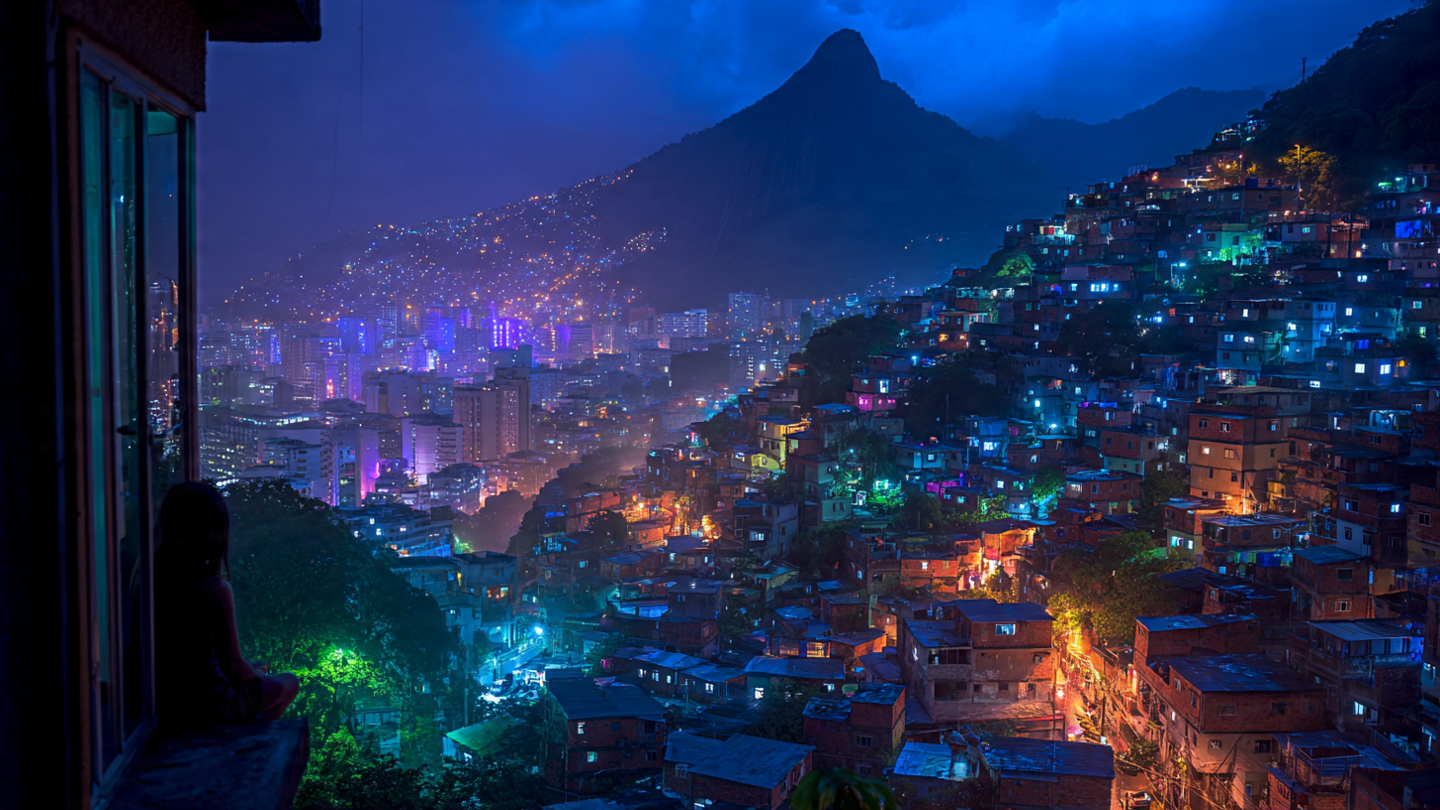
The first spark: the favela’s heartbeat.
• Theme: Roots, survival, longing.
• Song as fire: A quiet ember, the sound of the hillside alive at night.
[Intro]
As luzes piscam no morro, tamborzão no coração
I hear the hills that hum, calling me to belong
Suor na pele, fome na alma, mas eu vou cantar
The beat won’t stop, won’t stop, won’t stop
[Verso 1]
Grafite nas paredes conta nossa história real
Cada batida ecoa, som que não tem igual
Menina do subúrbio com voz pra conquistar
But the struggle runs deep, runs deep in my veins
Festa lá longe toca, mas aqui é meu lugar
Thunder in the distance, but this is where I stay
Respirando fumaça, suando pra sonhar
Every night I’m grinding, grinding for my day
[Pré-Refrão]
Som pesado bate forte no peito
This is my zone, my zone, meu jeito
Favela me criou, me ensinou a lutar
Fight for what’s mine, what’s mine, sem parar
[Refrão]
Morro me chama, eu vou responder
I belong here, here forever
Morro me chama, vou me encontrar
This is my voice, voice, minha vez de brilhar
[Verso 2]
Chuva cai no telhado, ritmo que alimenta
Cada gota que desce minha sede desperta
Pés descalços no chão, coração no compasso
Step by step I’m climbing, climbing from the bottom
Microfone na mão, voz que não se cansa
This is my moment, moment, minha esperança
Baile funk no sangue, é assim que eu danço
Moving to the rhythm, rhythm of my chance
[Pré-Refrão]
Som pesado bate forte no peito
This is my zone, my zone, meu jeito
Favela me criou, me ensinou a lutar
Fight for what’s mine, what’s mine, sem parar
[Refrão]
Morro me chama, eu vou responder
I belong here, here forever
Morro me chama, vou me encontrar
This is my voice, voice, minha vez de brilhar
[Ponte]
Tamborzão batendo como coração
Heartbeat of the hill, beating in my soul
Cada vicela conta, cada som é meu
Every story matters, every beat is true
As luzes piscam, mas eu sigo em frente
Lights may flicker but I won’t surrender
[Refrão Final]
Morro me chama, eu vou responder
I belong here, here forever
Morro me chama, vou me encontrar
This is my voice, voice, minha vez de brilhar
[Outro]
Tamborzão no coração, na alma, no som
The beat goes on, goes on, aqui é meu tom
As luzes piscam no morro
But I shine bright, bright, sem socorro
Batidas Emprestadas (Borrowed Beats)

The ember hidden in shadows.
• Theme: Discovery, secret creation.
• Song as fire: A flicker of possibility, fragile but alive.
[Verse 1]
você não sabe
mas depois da meia-noite
eu abro aquela gaveta
onde guardo
o que sobrou
dedos lentos
procuram
o botão que ainda funciona
[Chorus]
me encontro aqui
neste quarto pequeno
fazendo sons
que só eu escuto
batidas emprestadas
em teclas que falharam
é minha forma
de respirar
[Verse 2]
você dorme
enquanto eu costuro
melodias em silêncio
cada nota
uma promessa
que amanhã
talvez
eu seja corajosa
os vizinhos não sabem
do meu segredo eletrônico
[Chorus]
me encontro aqui
neste quarto pequeno
fazendo sons
que só eu escuto
batidas emprestadas
em teclas que falharam
é minha forma
de respirar
[Bridge]
se você soubesse
como o ritmo
cresce dentro de mim
quando tudo está quieto
como cada batida quebrada
carrega esperança
como cada som roubado
me mantém viva
[Chorus]
me encontro aqui
neste quarto pequeno
fazendo sons
que só eu escuto
batidas emprestadas
em teclas que falharam
é minha forma
de respirar
[Outro]
você não precisa saber
mas eu ouço o amanhã
nestas teclas que falharam
Batismo do Baile (Baile Baptism)
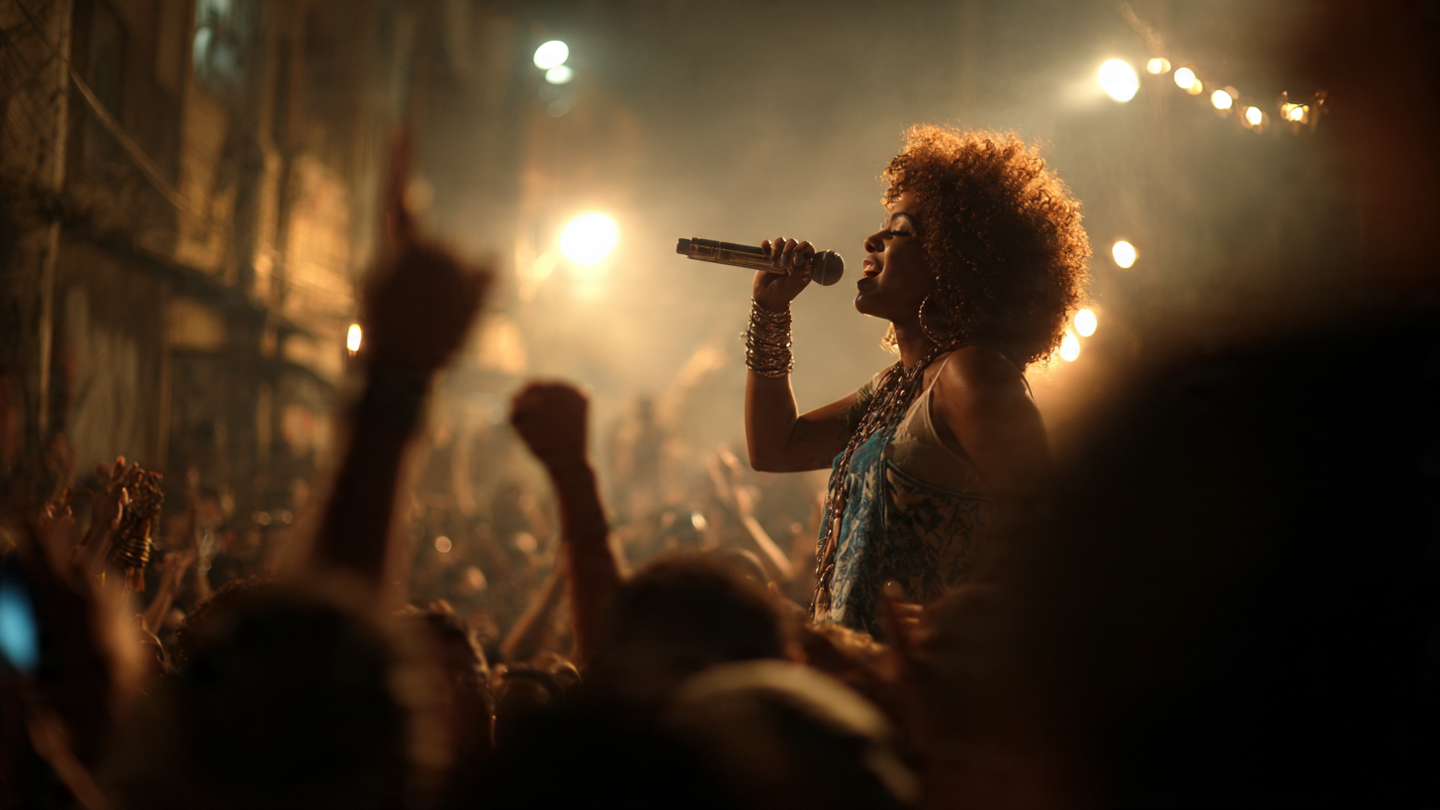
The ember ignites into flame.
• Theme: Fear becomes empowerment.
• Song as fire: A sudden blaze, bursting with energy and light.
[Intro]
Tá na hora, né
MC Lia chegou
(Vamo, vamo)
[Verso 1]
O suor descendo pela testa
Coração batendo que nem festa
Olho pro palco, perna treme
Mas eu sei que hoje eu vence
[Refrão]
Minha voz treme, depois o grave pega
Eu caio no fogo, MC Lia está viva
Do medo nasce força que não nega
Primeiro show, alma explosiva
(MC Lia está viva!)
(MC Lia está viva!)
[Verso 2]
Tamborzão engole todo medo
Multidão rugindo cedo
Mão no mic, voz que explode
Transformação que ninguém pode
Pisa forte no palco agora
Energia que transborda
Do nervoso vira potência
Essa é minha independência
[Refrão]
Minha voz treme, depois o grave pega
Eu caio no fogo, MC Lia está viva
Do medo nasce força que não nega
Primeiro show, alma explosiva
(MC Lia está viva!)
(MC Lia está viva!)
[Ponte]
De pequena sonhei com isso
Hoje é real, não é feitiço
Crowd gritando meu nome alto
Primeira vez, primeiro salto
[Refrão Final]
Minha voz treme, depois o grave pega
Eu caio no fogo, MC Lia está viva
Do medo nasce força que não nega
Primeiro show, alma explosiva
Renasci nesse palco aqui
Empoderada, eu descobri
Que o medo vira poder
MC Lia veio pra vencer
(MC Lia está viva!)
[Outro]
Primeiro show
Mas não o último, não
(Vamo, vamo)
MC Lia tá na área
Nome em Neon (A Name in Neon)
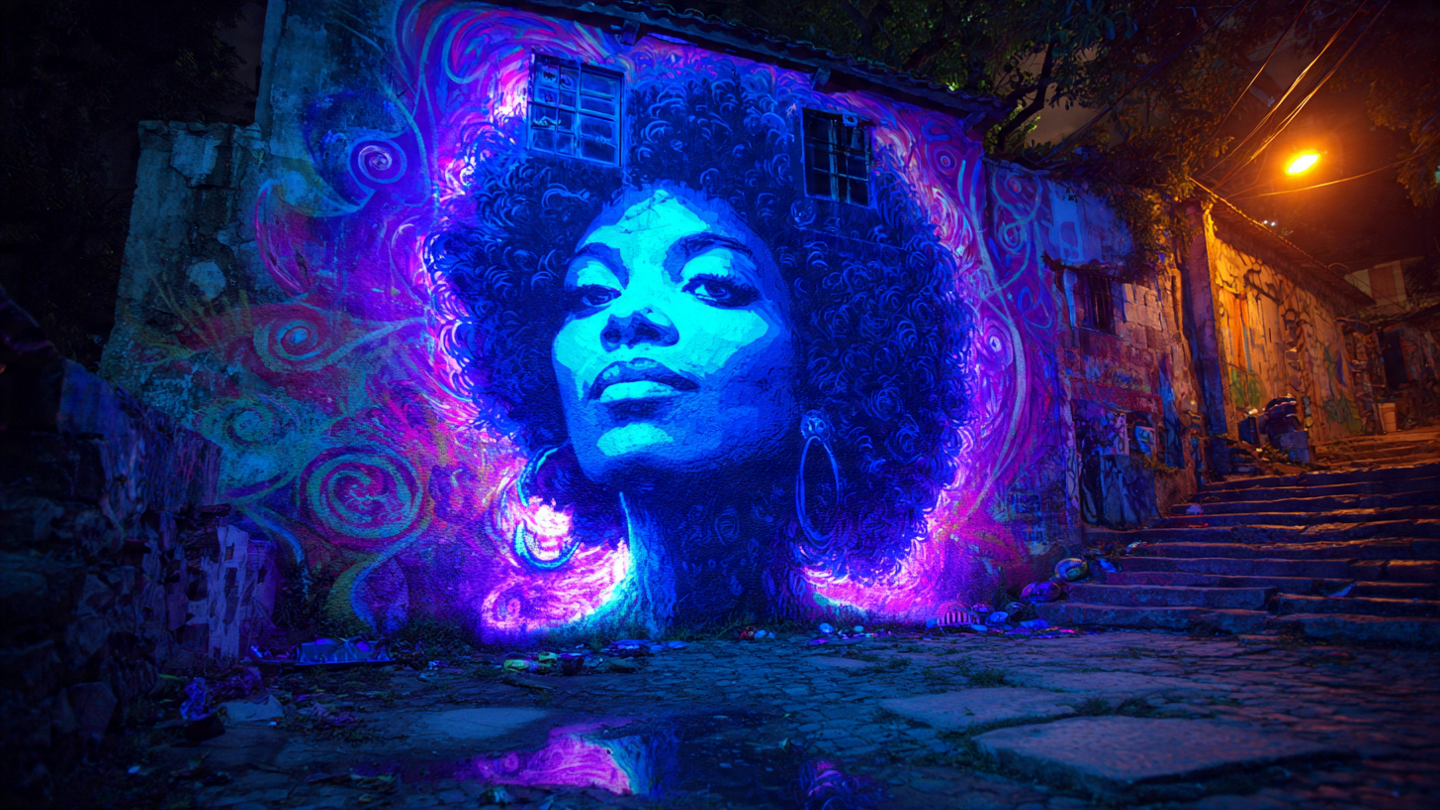
The flame spreads across walls and wires.
• Theme: Recognition, rebellion.
• Song as fire: Fire written in graffiti, glowing against the dark.
[Verse 1]
Ei, mano, ‘cê sabe quem chegou?
Lia do morro que a vida levou
Levou, levou, levou pra longe
Agora o nome dela ‘tá em toda ponte
‘Tá, ‘tá, ‘tá pintado nas paredes
Lia, Lia, Lia que tudo pode
[Pre-chorus]
E eu te conto, te conto como foi
Como foi, como foi que ela subiu
Subiu, subiu, subiu sem parar
Morro abaixo, cidade pra conquistar
[Chorus]
Lia, Lia, nome na parede
Cidade fala o que a favela concede
Concede, concede, ‘cê pode crer
Lia linda que faz acontecer
Faz, faz, faz o bagulho rolar
Todo mundo quer ela imitar
Lia, Lia, rainha do lugar
Mas tem inveja querendo derrubar
[Verse 2]
Ô minha irmã, ‘cê não imagina
Como é que é quando a vida te ensina
Ensina, ensina que nem tudo é flor
CD pirata tocando seu valor
Valor, valor que você conquistou
Cada batida que o coração acelerou
Acelerou desde o primeiro dia
Quando ‘cê disse “vai ser, Lia”
[Pre-chorus]
E eu te conto, te conto como foi
Como foi, como foi que ela subiu
Subiu, subiu, subiu sem parar
Morro abaixo, cidade pra conquistar
[Chorus]
Lia, Lia, nome na parede
Cidade fala o que a favela concede
Concede, concede, ‘cê pode crer
Lia linda que faz acontecer
Faz, faz, faz o bagulho rolar
Todo mundo quer ela imitar
Lia, Lia, rainha do lugar
Mas tem inveja querendo derrubar
[Rap]
Lia, linda, livre pra voar
Vida loka que soube aproveitar
Aproveitou cada chance que chegou
Chegou longe, longe onde ninguém pensou
Pensou que ia, ia conseguir sair
Sair do beco sem nunca desistir
Desistir nunca foi do seu perfil
Perfil de luta, luta desde abril
Abril de dois mil, quando tudo começou
Começou pequeno mas nunca parou
Parou pra quê? Se o sonho ‘tava ali
Ali na frente, frente pra seguir
Seguir em frente mesmo com a pressão
Pressão de quem tem inveja no coração
Coração que bate forte, forte assim
Assim que é Lia, Lia até o fim
[Bridge]
E quando o vento vento sopra forte
Forte contra quem mudou de sorte
Sorte de quem sabe, sabe lutar
Lutar por tudo que quer conquistar
Conquistar o mundo com seu som
Som que ecoa, ecoa e faz o bem
Bem ou mal, mal falado vão falar
Falar da Lia que soube chegar
[Chorus]
Lia, Lia, nome na parede
Cidade fala o que a favela concede
Concede, concede, ‘cê pode crer
Lia linda que faz acontecer
Faz, faz, faz o bagulho rolar
Todo mundo quer ela imitar
Lia, Lia, rainha do lugar
Mas tem inveja querendo derrubar
[Outro]
Lia, Lia, sempre vai estar
Estar na mente de quem sabe amar
Amar a luta, luta, luta sem parar
Sem parar, sem parar de acreditar
O Peso dos Olhos (The Weight of Eyes)
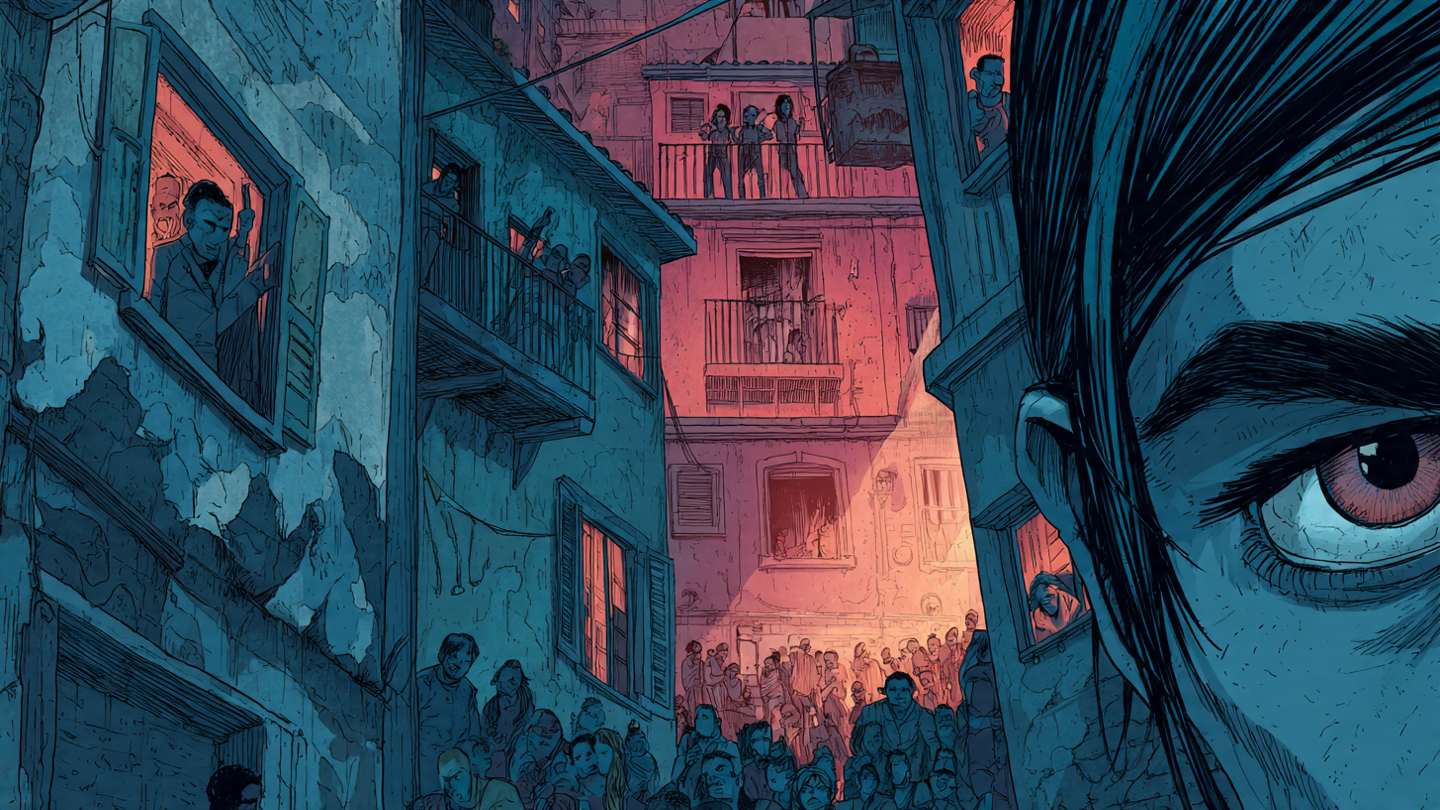
The fire draws scrutiny, heat attracts danger.
• Theme: Judgment, sexism, pressure.
• Song as fire: A controlled burn, heat pressed on every side.
[Intro]
[Acoustic guitar, sparse]
Eles olham
Eles olham
O peso dos olhos
[Verse 1]
Toda vez que eu passo, sinto a queimadura
Não foi feita pra ficar, não foi feita pra ter certeza
Cada homem na esquina tem seu próprio julgamento
A polícia pergunta onde vou, família pede que eu minta
[Chorus]
Por que peso tanto?
O peso dos olhos
Por que peso tanto?
O peso dos olhos na minha pele
Pesado como balas
Afiado como pecado
O peso dos olhos
[Verse 2]
Eles riem quando eu falo, duvidam quando eu sei
Minha roupa é uma resposta pra perguntas que não fiz
O calor aperta, vem de todos os lados da sala
Eu queimo devagar mas não vou apagar
[Chorus]
Por que peso tanto?
O peso dos olhos
Por que peso tanto?
O peso dos olhos na minha pele
Pesado como balas
Afiado como pecado
O peso dos olhos
[Bridge]
O peso dos olhos
O peso dos olhos
O peso dos olhos
Coroa ou corrente?
[Chorus]
Por que peso tanto?
O peso dos olhos
Por que peso tanto?
O peso dos olhos na minha pele
Pesado como balas
Afiado como pecado
O peso dos olhos
O peso dos olhos
Amor na Estática (Love in the Static)

The fire flickers, warm in the chaos.
• Theme: Love, intimacy, fragile sanctuary.
• Song as fire: Flames entwining, tender yet unstable.
[Intro]
Ah, ah, ah
Na madrugada
Ah, ah
[Verso 1]
Eu te vi na porta
Sob a luz que pisca
Teu olhar me puxa
Entre o som que arrasta
O grave bate fundo
Teu corpo tá tremendo
Eu chego mais perto
Tua mão na minha
(ah)
As sirenes cantam
Mas eu só te escuto
Teu sussurro quente
No meu ouvido cru
[Refrão]
Achamos amor na estática
Entre tiros e batidas
Teu toque é faísca no escuro
Achamos amor na estática
Tua boca salva tudo
Quando o mundo queima aqui fora
(oh, oh)
[Verso 2]
Tá tarde demais
Pra voltar sozinho
Te beijo devagar
Enquanto o barulho
Rasga a parede fina
Teu peito no meu peito
É o único abrigo
(ah)
As chamas sobem
Mas a gente desce
Pro chão desse quarto
Onde nada alcança
A gente se enrosca
Como fogo vivo
[Refrão]
Achamos amor na estática
Entre tiros e batidas
Teu toque é faísca no escuro
Achamos amor na estática
Tua boca salva tudo
Quando o mundo queima aqui fora
(oh, oh)
[Ponte]
Eu sei que é frágil
Tudo que a gente tem
(ah, ah)
Mas quando você me toca assim
Eu não lembro do perigo
Só do calor da tua pele
(oh)
Arde, arde
Esse momento nosso
Arde
[Refrão Final]
Achamos amor na estática
Entre tiros e batidas
Teu toque é faísca no escuro
Achamos amor na estática
Tua boca salva tudo
Quando o mundo queima aqui fora
(oh, oh)
[Outro]
Na estática
Na estática
Ah, ah
Teu toque
(Na estática)
A Batida Interrompida (The Raid)
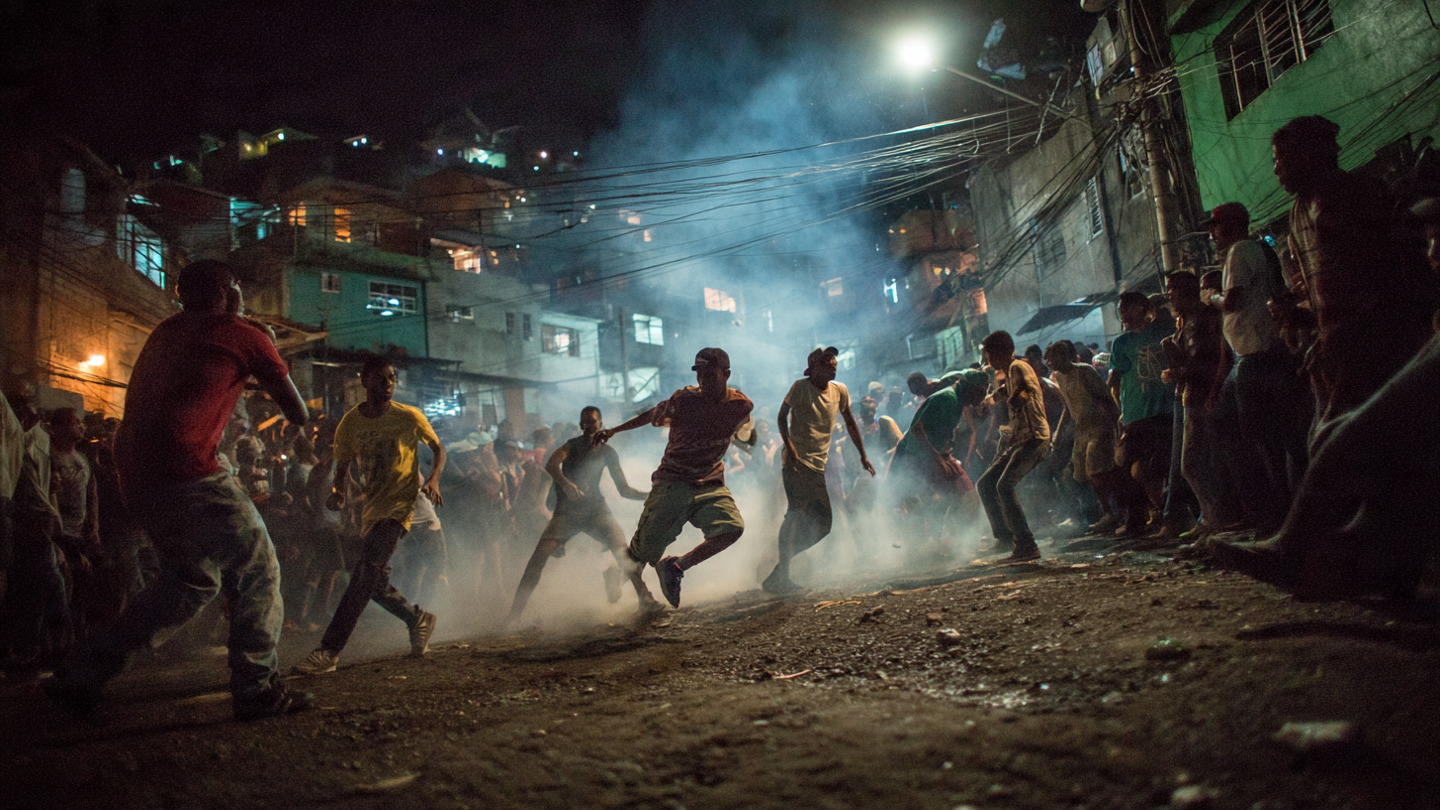
The fire is nearly extinguished.
• Theme: Violence, silence, oppression.
• Song as fire: A blaze attacked by water and smoke, but not fully killed.
[Intro – Bass pesado]
[Verse 1]
Tô na pista
Corpo suando
O grave bate
Tô dançando
A noite é nossa
Até agora
Ninguém pensando
Que vem embora
[Pre-Chorus]
Mas eu sinto algo errado
Um barulho do lado
Alguém grita “ó o radar”
E começa a desandar
[Verse 2]
Caralho, é a polícia
A porta arromba
Som cortado
Vem a bomba
Gás lacrimogêneo
Não consigo ver
Gente correndo
Vou morrer
Passos pesados
Gritos, sirene
Arma apontada
Pro moleque
Empurra, bate
Joga no chão
Minha alegria
Vira invasão
Porra, eu não fiz nada
Só vim dançar
Agora tudo
Vai se calar
[Chorus]
Das linhas do baixo ao estampido das armas
O ritmo vira silêncio, invadem nossa alegria
Mas nunca nossa alma
A batida não morre
Só baixa o volume
A batida não morre
Só baixa o volume
[Bridge – Quase silêncio, só percussão mínima]
Tá tudo parado
Respiro fundo
O som acabou
Mas eu tô vivo ainda
Caralho, eu tô vivo ainda
[Verse 3]
Eles levaram
Três menino
Mãe chorando
No caminho
A caixa quebrada
Microfone no chão
Mas no peito
Segue a pressão
Do grave, da raiva
Do que a gente é
Eles calam
Mas não de vez
[Chorus]
Das linhas do baixo ao estampido das armas
O ritmo vira silêncio, invadem nossa alegria
Mas nunca nossa alma
A batida não morre
Só baixa o volume
A batida não morre
Só baixa o volume
[Outro – Bass retorna gradualmente]
(A batida não morre)
(Só baixa o volume)
(A batida não morre)
(Só baixa o volume)
[Fim]
O Preço da Liberdade (Freedom’s Price)
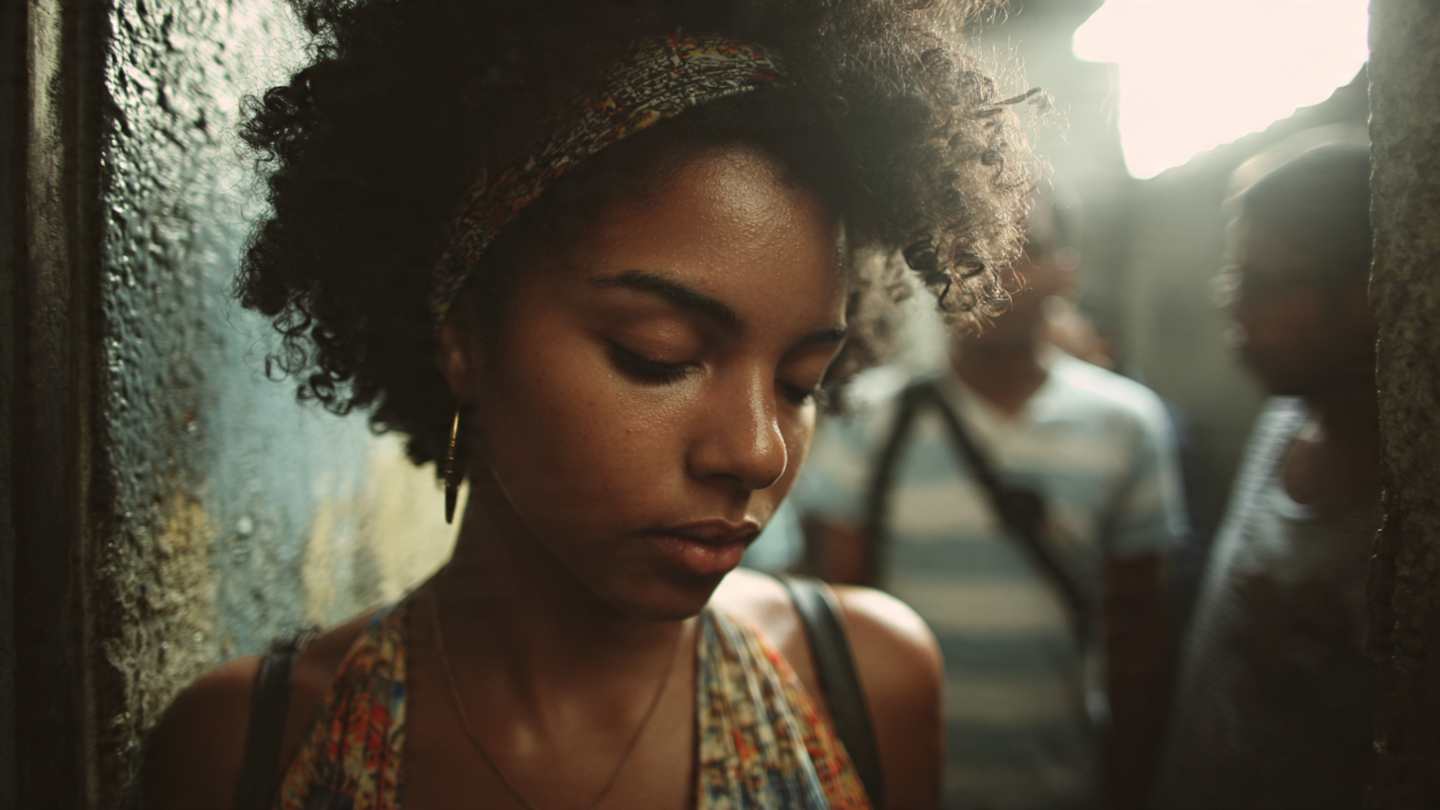
The fire burns low, but glows stubbornly.
• Theme: Sacrifice, resilience.
• Song as fire: Coals glowing in darkness, carrying heat into the future.
[Verse 1]
Pisei no portão, sol nascendo devagar
Mãos tremendo na alça, ninguém vem me abraçar
Olhares de lado, medo dentro do olhar
Voltei pra casa, mas não há mais lar
[Verse 2]
Fotografia velha, rostos que envelheceram
Palavras engasgadas, perguntas que não fizeram
Cada dia que passei, foi noite que viveram
As marcas que eu carrego, nos outros se perderam
[Chorus]
Liberdade pesa, coroa de pedra, silêncio é morte, então carrego a canção
Liberdade pesa, coroa de pedra, silêncio é morte, então carrego a canção
[Verse 3]
Violão nos braços, peso de uma causa
Eles querem sossego, eu trouxe a clausura
Sacrifício tem preço, cobrado sem pausa
Cada nota que toco rasga a costura
[Verse 4]
Filho desvia os olhos quando falo do passado
Esposa fecha a porta, coração trancado
Resistir custou tudo, deixou tudo marcado
Mas calar é morrer de pé, derrotado
[Chorus]
Liberdade pesa, coroa de pedra, silêncio é morte, então carrego a canção
Liberdade pesa, coroa de pedra, silêncio é morte, então carrego a canção
[Bridge]
Não pedi perdão
Não vendi razão
Paguei com distância
Eles com a infância
Mas a voz persiste
Chama que resiste
[Chorus]
Liberdade pesa, coroa de pedra, silêncio é morte, então carrego a canção
Liberdade pesa, coroa de pedra, silêncio é morte, então carrego a canção
[Outro]
Então carrego a canção
Então carrego a canção
Rimas de Fogo (Rhymes of Fire)
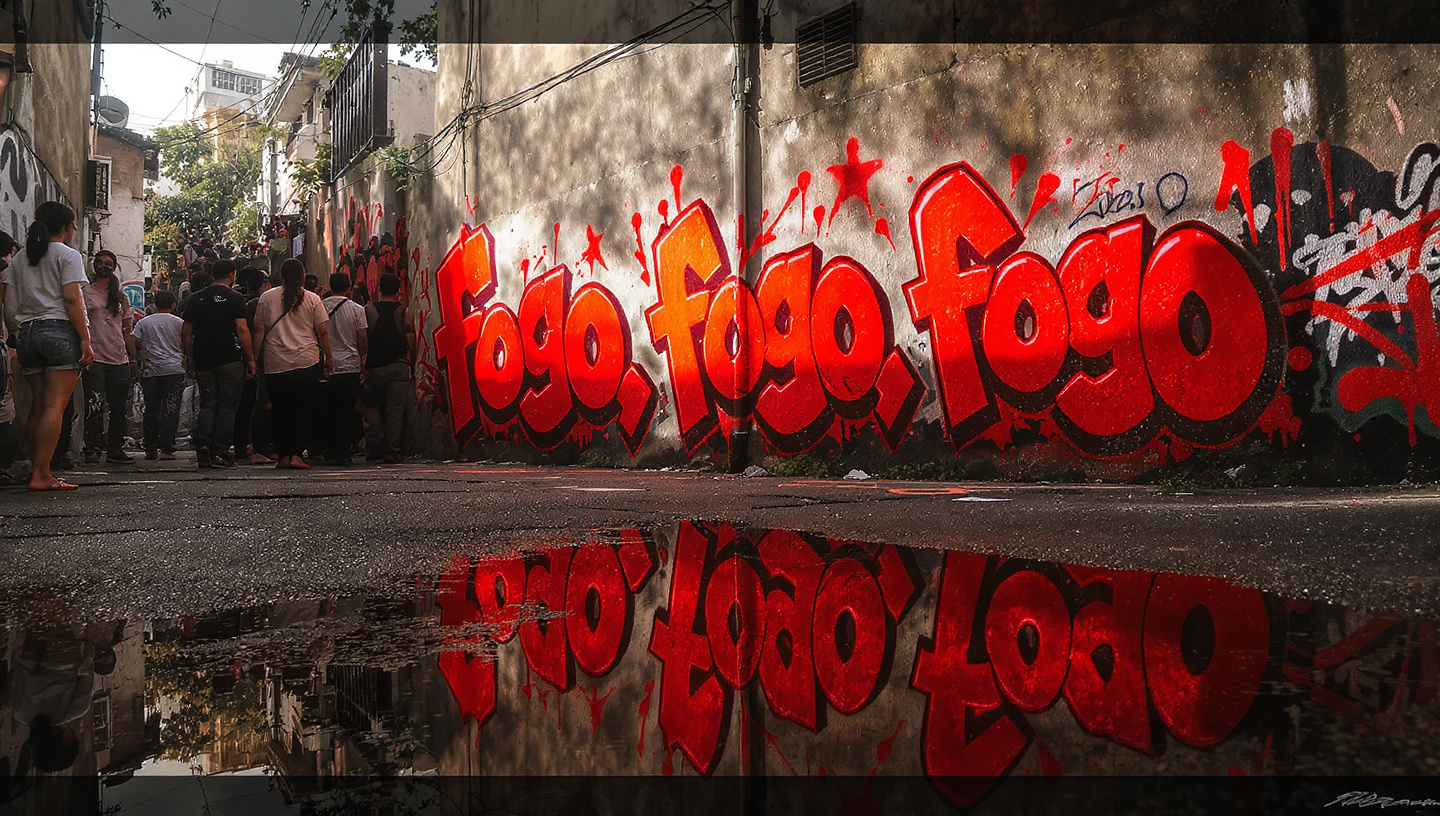
The fire roars back, hotter and more dangerous.
• Theme: Protest, defiance, awakening.
• Song as fire: Flames leaping high, impossible to ignore.
[Intro]
Tá ligado, mano
A voz que não morre
Fogo, fogo, fogo
[Verse 1]
Minhas rimas são fogo, queimando as mentiras
Cada verso uma tocha no céu da favela
Eles vestem farda, trazem morte na esquina
Mas meu som é chama que revela, que revela
Sangue seca no asfalto, mãe chora no portão
Enquanto lá em cima, eles contam o milhão
Minha língua é lâmina, meu verso é munição
Queimo a falsidade com cada respiração
Tá ligado, mano? O papo reto aqui
Bico calado deles enquanto a gente sofre, sim
Mas eu trago a tocha, incendeia tudo enfim
Verso após verso, faço o império cair
Fogo na boca, fogo no peito também
Queima a injustiça, não sobra ninguém
Minha rima é gasolina pro povo que vem
Acende a revolta, firmeza, amém
[Chorus]
Quem vai apagar o fogo que a gente acende?
Quem vai calar a voz que nunca se rende?
Queima, queima, queima tudo que mente
Queima, queima, fogo na mente
Quem vai apagar o fogo que a gente acende?
Quem vai calar a voz que nunca se rende?
Queima, queima, queima tudo que mente
Queima, queima, nossa chama ascende
[Verse 2]
Cada linha que eu solto é brasa incandescente
Derretendo a máscara do opressor presente
Eles mandam bala, eu mando verso quente
Transformo dor em chama permanente
Mano, cê vê o que rola? Violência todo dia
Mas silêncio lá de cima, pura hipocrisia
Meu rap é a tocha dessa rebeldia
Acendo a consciência, espalho a profecia
Tá na hora, sangue bom, de botar pra derreter
O sistema podre que nos faz sofrer
Minhas rimas são fogo, pode perceber
Cada barra um incêndio pronto pra crescer
Queimo papel, queimo papo de bacana
Queimo a mentira que nos engana na semana
Verso após verso, chama que não se engana
Fogo da favela, resistência soberana
[Chorus]
Quem vai apagar o fogo que a gente acende?
Quem vai calar a voz que nunca se rende?
Queima, queima, queima tudo que mente
Queima, queima, fogo na mente
Quem vai apagar o fogo que a gente acende?
Quem vai calar a voz que nunca se rende?
Queima, queima, queima tudo que mente
Queima, queima, nossa chama ascende
[Verse 3 – English/Spanish Mix]
They want us silent, but I’m burning todas las mentiras
My rhymes are flames, incendiando their empire
Cada palabra mía is gasoline on wire
Breaking chains con fuego, lifting us higher
Street poet con la verdad que aspira
Burning down corruption, mi voz nunca expira
Favela fire spreading, revolution’s choir
Queima, queima, baby, we never tire
Sangue nas ruas but we rise from the pyre
My torch illuminates what they conspire
Verso tras verso, I’m the truth supplier
Fire in my lungs, rap’s amplifier
[Chorus]
Quem vai apagar o fogo que a gente acende?
Quem vai calar a voz que nunca se rende?
Queima, queima, queima tudo que mente
Queima, queima, fogo na mente
Quem vai apagar o fogo que a gente acende?
Quem vai calar a voz que nunca se rende?
Queima, queima, queima tudo que mente
Queima, queima, nossa chama ascende
[Solo]
(Fogo!)
(Queima tudo!)
(A voz que não morre!)
(Fogo, fogo, fogo!)
(Levanta!)
[Outro]
Minhas rimas são fogo
Queimando as mentiras
Cada verso uma tocha
No céu da favela
Queima, queima, queima
Fogo eterno
O Baixo da Traição (Betrayal’s Bassline)
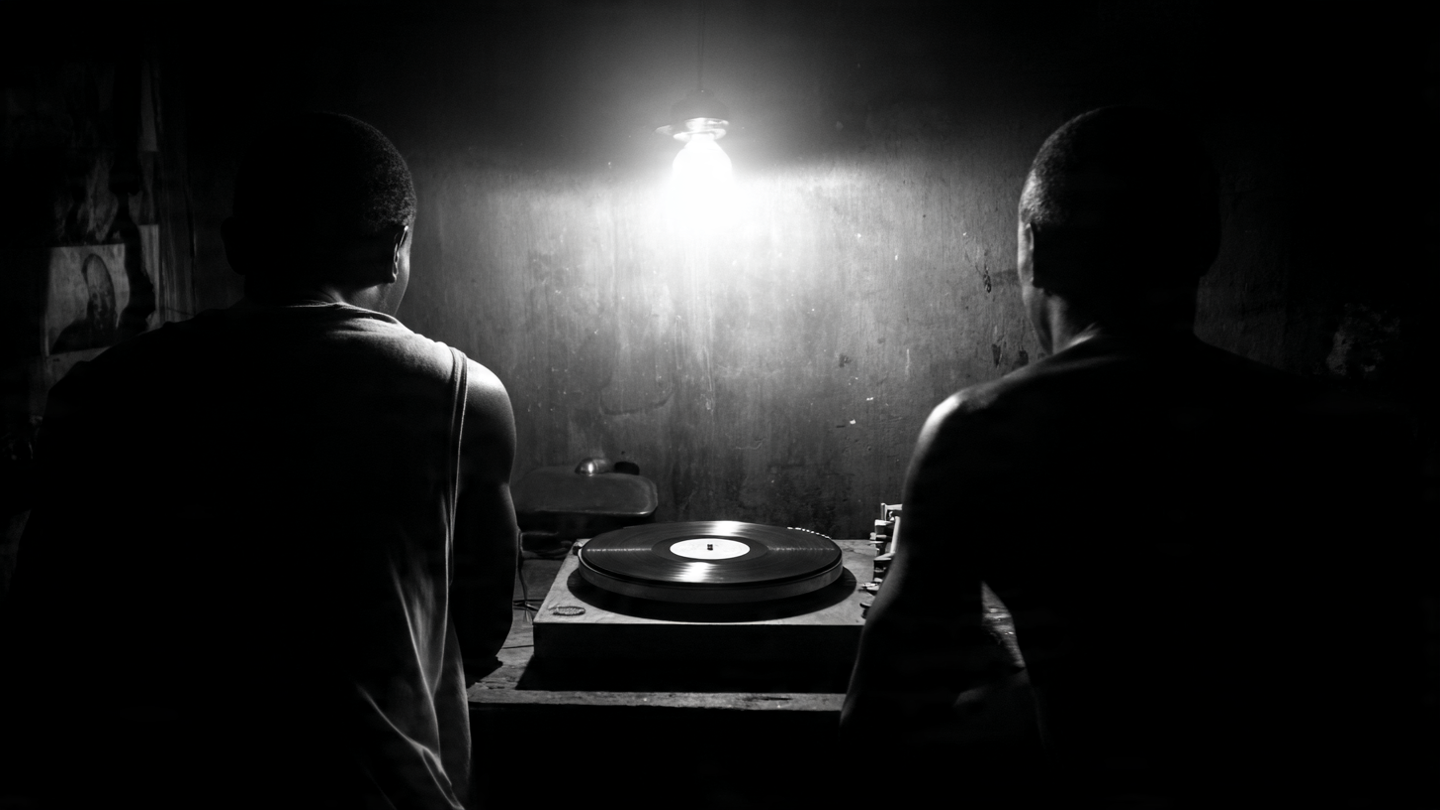
The fire consumes trust, leaves ash behind.
• Theme: Betrayal, heartbreak, anger.
• Song as fire: Fire turned inward, destructive and bitter
[Intro]
Yeah, yeah
Ahhhh
Seu baixo batendo, mano
Batendo forte
Ahhhh
[Verso 1]
Seu baixo me quebrou
Teu silêncio falou
Você sumiu do lance
Deixou só a dor no ar
Seu baixo me quebrou
Tuas mentiras rolaram
Você jurou que não
Mas eu vi o que cê fez
Seu baixo me quebrou
Teu olhar desviou
Você fingiu demais
Agora eu tô na amargura
Seu baixo me quebrou
Teu corpo foi pra outro
Você achou que eu não sabia
Mas o som não para
Teu silêncio gritou
Você mentiu na cara
Teu silêncio gritou
Cada batida é raiva
[Refrão]
Seu baixo me quebrou
Seu silêncio fala mais alto que o som
[Verso 2]
Você brincou comigo
Teu rolê nas costas
Você pensou que era esperto
Mas a traição tem eco
Você jurou amor
Teu beijo era falso
Você vendeu a gente
Por migalha do outro
Você me usou
Teu jogo tá exposto
Você caiu da máscara
Tarde demais pra desculpa
Teu silêncio é pesado
Você não responde mais
Teu silêncio é culpa
Batendo no meu peito
Você destruiu tudo
Tuas promessas vazias
Você riu da minha cara
Agora eu rio da sua
[Refrão]
Seu baixo me quebrou
Seu silêncio fala mais alto que o som
[Bridge]
Ahhhh
O eco não para
Não para, não para
Tua voz sumiu
Mas o baixo ficou
O baixo ficou
Batendo, batendo
Ahhhh
[Refrão]
Seu baixo me quebrou
Seu silêncio fala mais alto que o som
[Outro]
Seu baixo me quebrou
Teu silêncio me matou
Você foi embora
Mas a dor ficou
Yeah
Ahhhh
A Noite de Mil Tambores (The Night of a Thousand Drums)
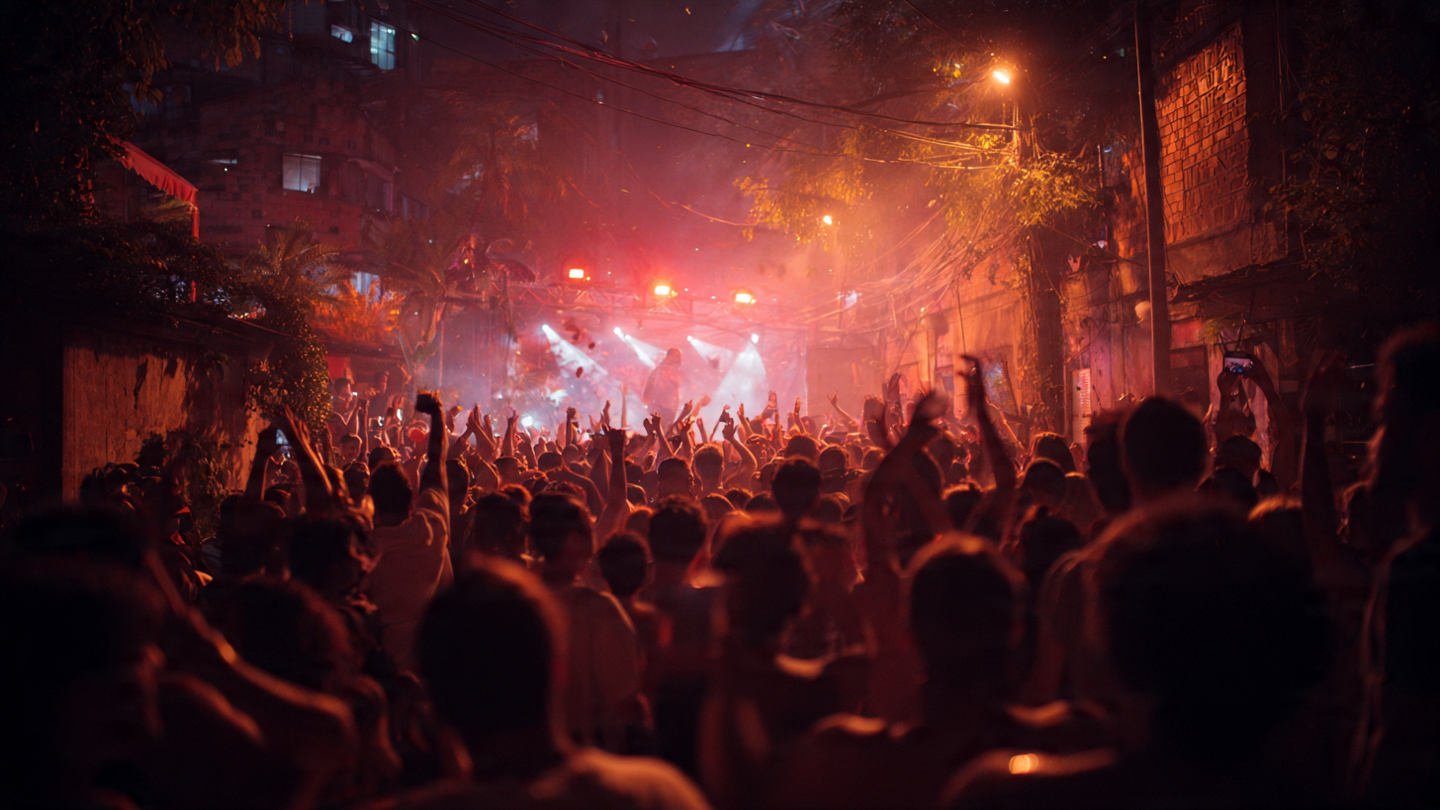
The fire becomes a wildfire, spreading through the crowd.
• Theme: Unity, uprising, triumph.
• Song as fire: A roaring inferno of voices and beats, communal and unstoppable.
[Verse 1]
Eu chego só
Mas ouço os tambores
Eu chego só
Mas já tem vozes
O chão treme
Meus pés se movem
O chão treme
E eu não paro
[Pre-chorus]
Cada batida
Mais um chegando
Cada batida
Mais forte o som
[Chorus]
Mil tambores, mil mãos
Hoje a gente sobe
Hoje a gente não cai
Mil tambores, mil mãos
Hoje a gente sobe
Hoje a gente não cai
[Post-chorus]
(Ôôô ôôô ôôô)
(Êê êê êê)
(Ôôô ôôô ôôô)
[Verse 2]
Eu sinto a força
Nas minhas mãos
Eu sinto a força
De mil irmãos
Meu corpo vibra
Meu peito explode
Meu corpo vibra
Ninguém me para
[Pre-chorus]
Cada batida
Mais um acordando
Cada batida
Mais alto o grito
[Chorus]
Mil tambores, mil mãos
Hoje a gente sobe
Hoje a gente não cai
Mil tambores, mil mãos
Hoje a gente sobe
Hoje a gente não cai
[Post-chorus]
(Ôôô ôôô ôôô)
(Êê êê êê)
(Ôôô ôôô ôôô)
[Bridge]
Eu vim pequeno
Agora sou gigante
Eu vim calado
Agora eu canto
Nós somos mil
Nós somos mais
Nós somos mil
E não paramos
[Chorus]
Mil tambores, mil mãos
Hoje a gente sobe
Hoje a gente não cai
Mil tambores, mil mãos
Hoje a gente sobe
Hoje a gente não cai
[Chorus]
Mil tambores, mil mãos
Hoje a gente sobe
Hoje a gente não cai
Mil tambores, mil mãos
Hoje a gente sobe
Hoje a gente não cai
[Post-chorus]
(Ôôô ôôô ôôô)
(Êê êê êê)
(Ôôô ôôô ôôô)
(Êê êê êê)
[Outro – Percussion fade]
Além da Favela (Beyond the Favela)

The fire spreads beyond the hills, eternal.
• Theme: Legacy, transcendence, survival.
• Song as fire: Flames glowing on the horizon, carried into the world.
[Movement I] “Sementes Na Terra”
[Intro]
(Antes do sol)
Antes do sol, tem o silêncio
Antes da voz, tem a respiração
O chão ainda frio nos pés
Esperando
[Verse 1 – Male]
Acordo com o barulho das panelas
A casa dormindo mas já viva
Minha mãe pisava assim, devagar
Carregando o peso do dia que vem
Eu conheço cada pedra desta rua
Cada rachadura conta algo
Estou aqui parado na porta
Sentindo o ar mudar de temperatura
[Verse 2 – Female]
Lá fora o mundo ainda não decidiu
Se vai ser difícil ou se vai ter graça
Coloco água no fogo, espero
Tudo começa pequeno assim
O bebê da vizinha chora baixo
Os cachorros se mexem nas sombras
Eu também sou filha deste chão
E carrego tudo que veio antes
[Pre-Chorus]
(Male) Você sente?
(Female) Eu sinto
(Male) Está chegando
(Female) Está aqui dentro
[Chorus]
Somos sementes guardadas na terra
Quietos mas não parados
A gente sabe esperar
Porque já esperamos tanto tempo
Tem força embaixo do que não se vê
Raízes que ninguém arranca
E quando o dia chegar
Vamos estar prontos
[Breakdown]
(Percussão suave, vozes sussurradas)
Escuta
O tambor do peito
Escuta
Antes da batida
Somos nós
Embaixo de tudo
Somos nós
[Chorus]
Somos sementes guardadas na terra
Quietos mas não parados
A gente sabe esperar
Porque já esperamos tanto tempo
Tem força embaixo do que não se vê
Raízes que ninguém arranca
E quando o dia chegar
Vamos estar prontos
Vamos estar prontos
Vamos estar aqui
[Movement II] “Vem”
[Verse 1 – Male vocal]
O sol tá subindo agora
Escuto você na rua
A vida tá batendo forte
Meu peito quer essa loucura
Sente o barulho crescendo
Gente passando, correndo
Eu sei que você tá sentindo
O dia tá nascendo
[Verse 2 – Female vocal]
Eu vejo você ali
Parado na esquina
Tô indo, tô indo
Minha alma caminha
O calor já tá subindo
Suor misturado com riso
Hoje eu preciso
Deixar tudo decidido
[Pre-chorus – Both]
Então me chama
Me chama agora
[Chorus – Both]
Vem, vem, vem, vem
Vem, vem, vem, vem
Vem, vem, vem, vem
Vem
[Verse 3 – Male vocal]
Telhado queimando de luz
Pé no chão, cabeça acesa
Não dá pra ficar parado
Quando tudo pede pressa
[Verse 4 – Female vocal]
Tô sentindo meu sangue
Pedindo pra me mexer
O ritmo tá no ar
Eu preciso de você
[Pre-chorus – Both]
Então me chama
Me chama agora
[Chorus – Both]
Vem, vem, vem, vem
Vem, vem, vem, vem
Vem, vem, vem, vem
Vem
[Bridge – Male, then Female, then Both]
Olha o que a gente pode ser
Olha o que a gente pode fazer
Olha o que a gente pode ser
[Final Chorus – Both]
Vem, vem, vem, vem
Vem, vem, vem, vem
Vem, vem, vem, vem
Vem, vem, vem, vem
Vem, vem, vem, vem
Vem
[Outro – Both, ad-lib]
(Vem!)
(Vem!)
(Vem!)
[Movement III] “Não Vou Cair”
[Verse 1]
Sinto o peso cair
A parede na frente
O calor vai subir
Mas eu não sou fraca, não minto
Cada barra que vem
Cada prova que dói
Eu atravesso também
Minha voz não se destrói
[Pre-Chorus]
O chão treme, o ar queima
Mas eu fico de pé
[Chorus]
Não vou cair, não vou cair
(Não vai cair!)
[Verse 2]
Suor no meu rosto
Fogo na minha pele
Eu conheço o custo
Mas ninguém me detém, ninguém freia
A pressão vai aumentar
O teste vai apertar
Eu vou continuar
Minha força vai gritar
[Pre-Chorus]
O chão treme, o ar queima
Mas eu fico de pé
[Chorus]
Não vou cair, não vou cair
(Não vai cair!)
Não vou cair, não vou cair
(Nunca vai cair!)
[Bridge]
Quando a barreira bloqueia
(A gente passa!)
Quando o fogo nos testa
(A gente aguenta!)
Quando tentam nos dobrar
(A gente resiste!)
Juntos, vamos durar
(Vamos existir!)
[Solo]
Eu olho direto
Pro que quer me quebrar
Aceito o embate, o desafeto
Mas eu não vou parar
[Chorus]
Não vou cair, não vou cair
(Não vai cair!)
Não vou cair, não vou cair
(Nunca vai cair!)
[Outro]
Não vou
(Não vai!)
Não vou
(Não vai!)
Não vou cair
[Movement IV] “Consegue Ver?”
[Intro – Strings and distant percussion]
[Verse 1 – Male Solo]
Eu acordei com o corpo pesado
Mas tem algo diferente no ar
Você está ali, respirando do lado
Será que vale a pena tentar?
As marcas ainda doem um pouco
Mas olha—tem calor na janela
Estende a mão, só mais um pouquinho
Me diz que você também sente ela
[Pre-Chorus]
A gente passou por tanta coisa
E ainda estamos aqui de pé
Então me responde com sinceridade
[Chorus]
Consegue ver?
Consegue ver?
Tem algo vindo, eu juro
Consegue ver?
Consegue ver?
(Consegue ver?)
Eu não quero ver sozinho
[Verse 2 – Male with light female harmonies]
Não sei se é cedo demais pra acreditar
Mas tua voz me faz querer confiar
Os outros também estão acordando
Ouço passos, portas se abrindo
[Pre-Chorus]
A gente passou por tanta coisa
E ainda estamos aqui de pé
Então me responde com sinceridade
[Chorus]
Consegue ver?
Consegue ver?
Tem algo vindo, eu juro
Consegue ver?
Consegue ver?
(Consegue ver?)
Eu não quero ver sozinho
[Bridge – Full harmonies, baile funk intensifies]
A gente consegue
Eu sei que a gente consegue
Olha pra mim
Olha pra nós
Respira fundo
Estamos juntos
[Final Chorus – Full arrangement]
Consegue ver?
Consegue ver?
Tem algo vindo, eu juro
Consegue ver?
Consegue ver?
(Sim, eu consigo ver)
A gente vê junto agora
[Outro – Strings swell, percussion fades]
[Movement V] “A Rua É Nossa”
[Intro – Percussão e Metais]
(Ô, ô, ô!)
(É nossa, é nossa!)
[Verso 1 – Voz Masculina]
Olha o movimento começando aqui
A quebrada toda vem pra se unir
Mano chama mano, traz a galera
É hoje que a gente domina a rua inteira
Porta aberta, todo mundo entra já
Ninguém fica de fora, vem dançar
Tipo assim, o som batendo forte
É a nossa vez, é o nosso corte
[Verso 2 – Voz Feminina]
Minha mina chega, traz a amiga dela
A vizinha desce, fica mais bela
Criançada corre, velho ta sorrindo
A rua ta viva, todo mundo vindo
Pega na minha mão, vamo junto então
Sozinho é fraco, junto é multidão
Tipo assim, energia ta subindo
O baile ta rolando, tá fervendo
[Pré-Refrão]
E quando a gente junta
A força fica bruta
(Vamo, vamo!)
E quando a gente grita
Ninguém nos acovita
(Chega, chega!)
[Refrão – Grupo Completo]
A rua é nossa, a força é nossa
(A rua é nossa!)
A rua é nossa, ninguém nos tira
(Ninguém nos tira!)
A rua é nossa, a voz é nossa
(A voz é nossa!)
A rua é nossa, vamo subir
(Vamo, vamo, vamo!)
A rua é nossa, a força é nossa
(É nossa, mano!)
A rua é nossa, todo mundo gira
(Gira, gira!)
A rua é nossa, a vez é nossa
(É nossa!)
A rua é nossa, não vai parar!
[Verso 3 – Voz Masculina]
O pessoal do bloco já chegou também
Trouxe mais cem, duzentos, vem
Tipo assim, a massa ta formada
União da quebrada, coisa sagrada
Mão na mão, formando a corrente
Corpo junto ao corpo, a gente sente
Que sozinho a vida é mais dura
Mas junto a gente tem estrutura
[Verso 4 – Voz Feminina]
Tá vendo aquele povo ali na esquina?
Agora todo mundo se aproxima
Vem dançar, vem pular com a gente
O baile ta quente, ta diferente
Tipo assim, não tem como parar
Quando a gente se junta pra dançar
Irmão com irmão, irmã com irmã
Nossa rua, nossa soberania
[Pré-Refrão]
E quando a gente junta
A força fica bruta
(Vamo, vamo!)
E quando a gente grita
Ninguém nos acovita
(Chega, chega!)
[Refrão – Grupo Completo]
A rua é nossa, a força é nossa
(A rua é nossa!)
A rua é nossa, ninguém nos tira
(Ninguém nos tira!)
A rua é nossa, a voz é nossa
(A voz é nossa!)
A rua é nossa, vamo subir
(Vamo, vamo, vamo!)
A rua é nossa, a força é nossa
(É nossa, mano!)
A rua é nossa, todo mundo gira
(Gira, gira!)
A rua é nossa, a vez é nossa
(É nossa!)
A rua é nossa, não vai parar!
[Solo – Metais e Percussão]
[Instrumental break]
(Ô, ô, ô!)
(É nossa!)
(Vamo, vamo!)
(Não para não!)
(Sobe, sobe!)
[Ponte]
Tamo junto, tamo vivo
Tamo forte, tamo ativo
Tamo aqui, tamo ali
Quando junta, faz assim—
[Refrão Final – Grupo Completo com Ad-libs]
A rua é nossa, a força é nossa
(A rua é nossa!)
A rua é nossa, ninguém nos tira
(Ninguém nos tira!)
A rua é nossa, a voz é nossa
(A voz é nossa, mano!)
A rua é nossa, vamo subir
(Vamo, vamo, vamo!)
A rua é nossa, a força é nossa
(É nossa, galera!)
A rua é nossa, todo mundo gira
(Todo mundo gira!)
A rua é nossa, a vez é nossa
(A vez é nossa!)
A rua é nossa, não vai parar!
(Não vai parar nunca!)
[Outro]
(A rua é nossa!)
(A força é nossa!)
(É nossa, é nossa!)
(Ô, ô, ô!)
[Movement VI] “Eu Carrego Suas Vozes”
[Verse 1 – Male vocalist]
Eu vi você cair no chão
Ouvi seu último suspiro
O vento levou seu nome
Mas ainda sinto você aqui comigo
Seus passos marcam a terra
Suas mãos plantaram sementes
Eu prometo não esquecer
Eu prometo não esquecer
[Pre-chorus – Male vocalist]
As velas queimam devagar
Suas chamas falam por você
[Chorus – Male and female harmonies]
Eu carrego suas vozes
Eu carrego suas vozes
Eu carrego suas vozes
Através dos morros, através do tempo
Eu carrego suas vozes
Eu carrego suas vozes
Eu carrego suas vozes
Para que nunca se percam
[Verse 2 – Female vocalist]
Eu caminho onde você andou
Sinto o peso de cada passo
Sua luta vive em mim agora
Sua dor se tornou minha força
As colinas guardam seu eco
O ar respira seu sacrifício
Eu prometo não esquecer
Eu prometo não esquecer
[Pre-chorus – Female vocalist]
As velas queimam devagar
Suas chamas falam por você
[Chorus – Male and female harmonies]
Eu carrego suas vozes
Eu carrego suas vozes
Eu carrego suas vozes
Através dos morros, através do tempo
Eu carrego suas vozes
Eu carrego suas vozes
Eu carrego suas vozes
Para que nunca se percam
[Bridge – Both vocalists alternating lines]
(Male) Você deu tudo que tinha
(Female) Eu recebi o que sobrou
(Male) Seu nome está no vento
(Female) Minha boca o pronuncia
(Both) E assim você continua
E assim você continua
[Final Chorus – Both with full harmonies]
Eu carrego suas vozes
Eu carrego suas vozes
Eu carrego suas vozes
Através dos morros, através do tempo
Eu carrego suas vozes
Eu carrego suas vozes
Eu carrego suas vozes
Para que nunca se percam
Eu carrego suas vozes
Eu carrego suas vozes
[Outro – Soft hums fading]
(Mmm… suas vozes…)
(Mmm… para sempre…)
[Coda – Movement VII] “Além da Favela”
[Intro – Atmospheric Baile Funk]
[Tamborzão begins, strings swell]
[Verso 1 – Solo]
Do início ao fim
Senti o som assim
Cada passo, cada voz
Tudo vive entre nós
Amanhecer voltou
O movimento ecoou
A luta que passou
A esperança que ficou
[Coro – Dueto]
Nossas vozes ecoam
Além do que eu vi
Soam, ressoam
Vivem dentro de mim
Nunca vão calar
Sempre vão pulsar
[Verso 2 – Solo]
Marcas no coração
Resistência, união
Lágrimas e suor
Alegria, tanto amor
Memória no peito
Sacrifício perfeito
Tudo que construí
Tudo que aprendi
[Coro – Dueto]
Nossas vozes ecoam
Além do que eu vi
Soam, ressoam
Vivem dentro de mim
Nunca vão calar
Sempre vão pulsar
[Ponte – Call and Response]
(Solo) Eu ainda sinto
(Coro) Batendo forte
(Solo) O que partilho
(Coro) Não tem morte
[Coro Final – Full Choir with Harmonies]
Nossas vozes ecoam
Além do que eu vi
Soam, ressoam
Vivem dentro de mim
Nunca vão calar
Sempre vão pulsar
[Outro – Fading echoes]
(Ecoam…)
(Sempre…)
(Nossas vozes…)
(Para sempre juntos…)
[Instrumental fade]
[Instrumental Outro]
Maré da Laje (Tide of the Rocks) (PDF)
Chapter 1: The Hills That Hum
The hills never sleep. At night, when the city lights below shimmer like coins thrown into a dark sea, the favelas hum with their own restless music. I used to lie awake on the thin mattress in my mother’s room, listening to the tamborzão bleed through the cracked walls. The beat rattled the tin roof, the floorboards, even my ribs. It was like the hill itself was alive — whispering, warning, reminding us that survival was a rhythm you never stopped dancing to.
I was not like the other boys I grew up with, though I tried to be for a while. They were loud, running the alleys with firecrackers and cheap beer, testing how far they could spit into the wind. Me, I hid in corners, humming to myself, sketching faces of women on scraps of cardboard, dreaming of the day the girl inside me could finally step out without fear. My brother laughed and called me “viado” when he caught me once, scribbling eyeliner borrowed from my cousin onto my face in the broken bathroom mirror. I told him I was only playing. But I wasn’t playing. I was praying.
The baile funk became my church. I didn’t go to mass much, though my mother begged me to, but the baile was different. I’d hear the bass echo up the alleys, and it felt like a call, like it was speaking to the person I hadn’t shown the world yet. Every girl on stage, every voice that dared to rise above the noise, reminded me of the woman I wanted to be. But in those days, all I could do was press my ear to the window and listen. My body was still a cage then, a place I didn’t yet know how to unlock.
The hill could be cruel, too. Every day was a negotiation with hunger, bullets, and the stares of men who thought my softness was weakness. I knew what they whispered — about how my hips swayed when I walked, how my voice didn’t crack the way theirs did. I learned to harden my face, to walk fast, to keep my head down. But inside, I was writing songs no one could hear yet, verses about survival and about becoming myself. The hills gave me both fear and fire.
Sometimes, when the baile carried on until dawn, I would imagine myself up there — not as the boy they thought I was, but as Maré, the woman I knew I was. Maré, with a microphone in her hand and a beat shaking the ground, singing her truth so loud the hills would have to listen. Back then it was just a dream, a secret melody I carried under my skin. But the hills were already humming it with me. I just had to find the courage to answer back.
Chapter 2: Borrowed Beats
The drum machine came to me like contraband, passed quietly from one life to another. Dona Celeste, my neighbor two doors down, had a son who’d once tried to be a DJ but ended up in prison. She pressed the scuffed, heavy box into my hands one afternoon with a shrug, saying, “Melhor nas suas mãos do que pegando poeira.” Better in your hands than gathering dust. I held it like treasure, even though half the buttons stuck and the wires dangled like veins.
That night, after everyone was asleep, I slid it out from under the bed. The plastic was cracked, the labels worn away, but when I pressed the power switch and saw the faint red light flicker alive, it was like the universe had whispered: This is for you. My fingers hovered over the pads as if they were sacred. I didn’t know what I was doing, not really, but the patterns started to take shape in my head — borrowed beats, Miami bass twisted into something raw and local, the heartbeat of the favela captured in jagged rhythms.
I kept the volume low so my mother wouldn’t hear. She already worried enough about me: about the way I looked at myself in the mirror too long, about the way I avoided the gangs my brother adored, about the way I seemed more fragile than the world would allow. If she heard me making music, she might’ve thought I was just wasting time. But this wasn’t a waste. It was survival. Each beat I stitched together was a promise to myself, a reminder that the girl I was becoming had her own sound, her own pulse.
In those secret hours, I also whispered words into the rhythm. Not full songs yet, just lines — verses about hunger, about the men with guns on the corner, about the ache of walking through the world in a body that felt half-borrowed, half-denied. I spoke about wanting to live without fear of someone laughing at the way I moved or calling me a name that wasn’t mine. The drum machine didn’t laugh, didn’t judge. It kept my secrets, turned them into something that almost felt like flight.
Sometimes, I would stop and listen to the silence after. The air would feel heavy with possibility, like the walls themselves had heard me and were deciding whether to hold my secret or carry it out into the streets. I wanted them to carry it, but I wasn’t ready. Not yet. For now, the beats stayed in my little room, hidden, fragile, alive only in the glow of that broken red light. But I knew, as surely as I knew my own name — not the name they gave me, but the one I claimed for myself — that one day I wouldn’t be able to keep the music, or myself, hidden. One day, the baile would hear me.
Chapter 3: The Baile Baptism
The night I first stepped onto the stage, I thought my heart might pound right through my ribs. The alley was already thick with smoke from grilled meat, with perfume, with the hot breath of too many bodies pressed together. Floodlights borrowed from a construction site swung over the crowd, catching faces painted in sweat and neon. The tamborzão throbbed so loud I could feel it in my teeth. Somewhere out there, kids were passing cheap beer, couples were grinding, and cops were circling like vultures at the edges. And me? I was standing behind the plywood stage, my palms slick, my whole body trembling.
“Vai, Maré,” my friend Jana pushed me forward. She was the only one who knew everything — about the girl I was, about the verses I scribbled on scraps of paper, about the nights with the drum machine. She believed in me even when I couldn’t. I shook my head, but she shoved me again, harder. “Vai logo. You’ve been waiting your whole life.”
My throat was dry when I grabbed the mic. I could feel the eyes on me, hundreds of them. Some of the men in the crowd smirked, whispering to each other. They knew me. They’d seen me grow up. To them, I was a boy playing dress-up, a joke waiting to be booed off stage. For a moment, I almost ran. I thought about my brother’s warnings, my mother’s fear, the names spat at me in the street. I thought: If I open my mouth, they’ll eat me alive.
But then the beat dropped — deep, heavy, relentless. And I remembered the nights in my room, the glow of that drum machine, the words I whispered like prayers. The music was the only place I had ever felt safe, the only place I had ever felt me. So I opened my mouth and let Maré out. My voice shook at first, cracked like a bottle smashed against the pavement. But then it steadied, growing louder, sharper, until it cut clean through the noise.
I rapped about the hunger, about the hills that hummed, about being trapped in a body that never matched the mirror but refusing to let anyone erase me. I rapped like I was on fire, and the crowd — the same crowd I had feared — began to roar. Kids started chanting my lines. Girls raised their arms like I was speaking for them. Even the men who had smirked fell quiet, their faces lit by something I couldn’t name. By the time I dropped the last verse, I wasn’t afraid anymore. I wasn’t hiding anymore. I was MC Maré da Laje. And the hills that hummed all my life were finally answering back.
When I left the stage, my legs were still trembling, but it wasn’t fear this time. It was power. For the first time, the cage around me had cracked open. I wasn’t just a trans girl dreaming in a cramped room anymore. I was a voice in the night, a spark in the favela fire. And once lit, fire doesn’t go back to sleep.
Chapter 4: A Name in Neon
At first it was just a whisper. Someone had recorded my set on a cracked Nokia, and the shaky video started passing from hand to hand. I didn’t even know until I heard my own voice spilling out of a neighbor’s window one morning, tinny and distorted, but alive. “MC Maré da Laje,” they said, testing the name, laughing a little, but repeating it anyway. By the end of the week, kids were chanting it in the alleys like a game. Maré. Not the name my brother cursed at me with. Not the name my mother still stumbled over. Maré.
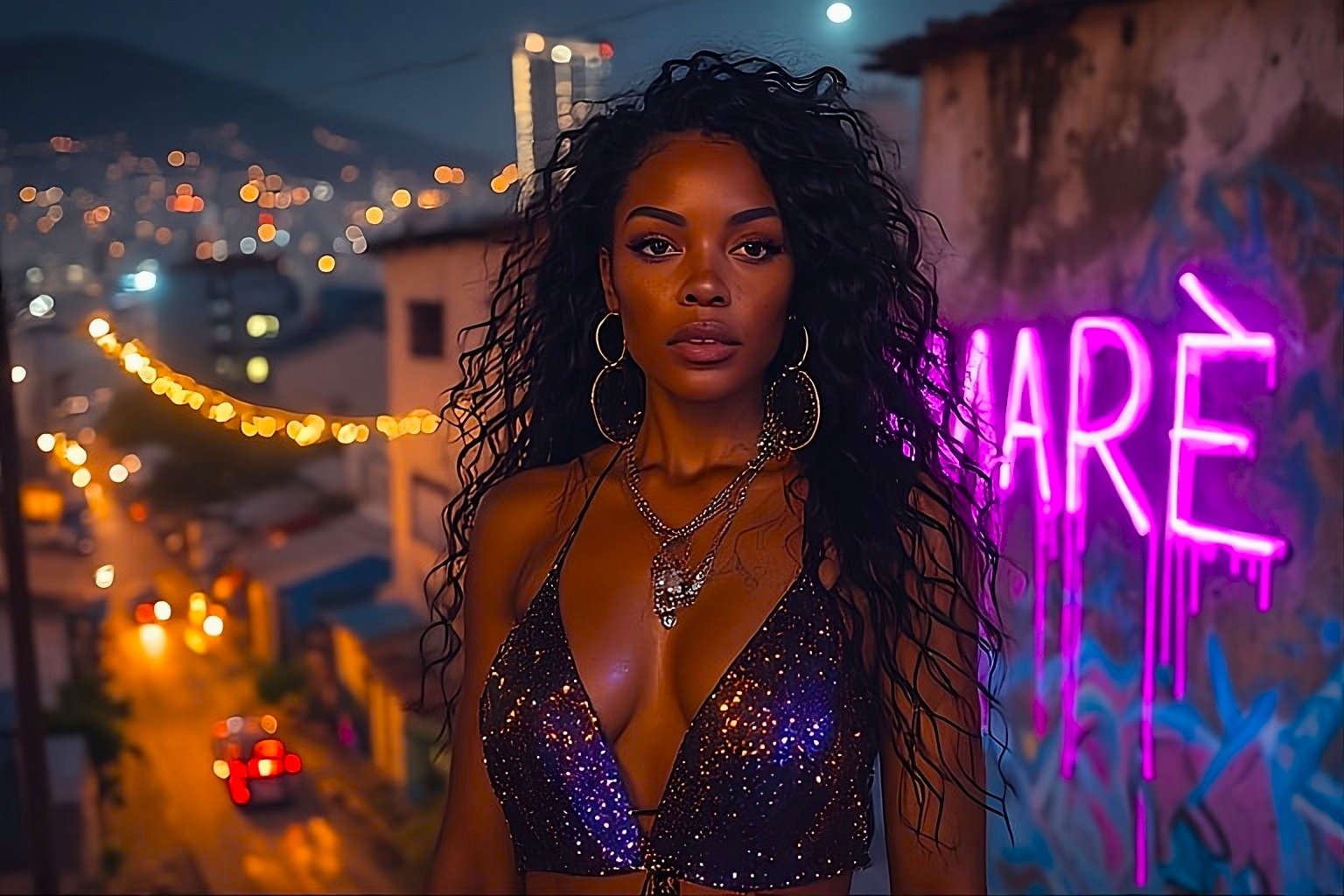
Graffiti was next. One night I walked home from the market and froze — there it was, sprayed in sloppy neon pink across a cracked wall: MARÉ. The letters dripped like fresh paint and blood all at once. I pressed my hand against it, half afraid it might disappear if I blinked. For so long, I’d been invisible, or worse, misnamed. Now my name glowed against concrete. It was proof I existed, proof the hills had heard me.
But fame in the favela is never clean. Some people smiled when they saw me, shouting my lines back like I was one of their own. Others spat on the ground, muttering that I was an abomination, a man pretending to be a queen. Rival MCs mocked me in their verses, calling me soft, saying I’d never last. I answered them the only way I knew how — with sharper words, fiercer beats. I carved my name louder, brighter, until even their insults sounded like echoes of my song.
I could feel the danger rising too. The cops had started showing up earlier at the parties, taking notes, muttering into radios when I was on stage. My brother pulled me aside one night, eyes dark. “You think they’ll let a traveca take over the mic? You’re painting a target on your back.” His words hurt, but not because I didn’t believe them. They hurt because he thought he was right. Because a part of me knew he was.
And still, I couldn’t stop. Every pirated CD, every spray-painted tag, every kid screaming my name was a brick in a house I was building from nothing. For once, the favela didn’t just hum — it echoed. It echoed with me. And no matter how much fear curled in my stomach, I wasn’t going back to silence. Neon burns bright, even when it’s fragile. And I was ready to glow until the whole city had to look.
Chapter 5: The Weight of Eyes
It started with the looks. Not the quick glances people used to throw me when I was just another girl trying to slip unnoticed through the alleys, but long, heavy stares that clung to me like smoke. Walking to the market, I could feel them burning into my back, men leaning against the walls with folded arms, women watching from windows, children whispering my name like a dare. Fame isn’t quiet. It follows you, pressing down until even the simplest errands feel like performances.
On stage, the eyes cut even deeper. Some were hungry, admiring, lifting me up with their cheers. Others were knives, sharp with envy or disgust. Male MCs stood in the shadows, arms crossed, smirks curling at the corners of their mouths. To them, I was trespassing — a trans woman on their stage, in their world. They laughed when I stumbled, whispered insults into their verses, tried to remind the crowd that I was nothing but a body out of place. But every time they doubted me, I found another rhyme, another punch of truth that left them quiet.
The cops’ eyes were the worst. They didn’t even hide it. I’d see them at the edge of the baile, helmets gleaming under the floodlights, faces blank but eyes locked on me. Like my words were bullets and they were already loading their weapons in return. They’d stand there, hand on the radio, and I’d rap louder, angrier, daring them to write my name in their little black notebooks. I wanted to be more than a name on a wall, but I didn’t want to become one on a gravestone. That tension burned in me every night.
At home, the weight came from my own blood. My mother would scold me with her eyes alone, her lips pressed tight, as if every lyric I spoke was dragging us closer to ruin. My brother’s gaze was harder — full of resentment, disappointment, maybe even jealousy. He had once been the one who carried respect on the block. Now it was me. But respect came wrapped in danger, and I knew he feared that one day it would cost us both more than we could pay.
And yet, the eyes also gave me strength. Every girl who looked at me with pride instead of pity, every kid who shouted my lines in the street, every neighbor who whispered “força” as I passed — they reminded me why I did this. Yes, eyes could burn holes, could weigh me down until I thought I might collapse. But they could also crown me. The question that haunted me every night was the same: were these eyes a crown or a chain? Was I rising, or was I being pulled toward the fire?
Chapter 6: Rival Fires
The first time another MC called me out by name, it felt like a knife slipped between my ribs. It wasn’t subtle, either. On a humid Saturday night, with the baile crowd already restless from cheap cachaça and heat, MC Brinquedo dropped a verse that spat my name like venom. “Maré da Laje, boneca quebrada, só brilha no escuro porque nunca aguenta a porrada.” The crowd roared, half in laughter, half in shock. I stood near the edge of the plywood stage, the words boiling in my blood. He had called me a broken doll, saying my glow would never survive the fight.
I wanted to run. To disappear into the crowd before their laughter branded me. But instead, something in me rose — a fire I didn’t know I had until that moment. Jana’s hand found my shoulder, her nails biting my skin. “Vai, Maré. Don’t let him write your verse.” My legs moved before my fear caught up. I grabbed the mic when Brinquedo tossed it down, daring me with his grin. The beat was still rattling the ground, the crowd buzzing like electricity on wet wires.
My verse came jagged, hot, alive with rage. I rapped about scars, about how fire doesn’t break glass, it reshapes it. I threw every insult back in his face — not with fists, but with lines so sharp the crowd gasped before they cheered. I told them I was no broken doll, but a mirror of their own hunger, their own fury. And when I shouted my name at the end, the whole hill shouted it back, louder than his insult had ever landed. For a moment, it felt like I had set the night on fire.
But fire draws smoke, and smoke chokes. Rivalries in the favela aren’t just music. Brinquedo’s crew glared from the shadows, hands tucked under shirts where steel might be waiting. I knew then this wasn’t just about lyrics. This was about respect, territory, survival. Jana whispered in my ear after the set, “You won the verse. But cuidado, menina. They don’t lose easy.” I laughed like I wasn’t scared, but my hands trembled all the way home.
That night, lying awake with the drum machine’s red light glowing faintly in the corner, I realized something: the hills that hummed didn’t just echo my dreams anymore. They echoed my enemies too. Fame wasn’t only a crown. It was a battlefield, and every beat could be both a prayer and a provocation. I had lit a fire with my words. Now I had to learn how not to burn.
Chapter 7: Blood Ties
My brother found me on the balcony one morning, cigarette smoke curling between us like a wall. The sun hadn’t even cleared the rooftops yet, but he was already wound tight, jaw clenched, eyes heavy with something darker than sleep. He didn’t say my name — not Maré, not the other one either. Just, “Você tem que parar.” You have to stop. His voice was flat, the way a knife is flat before it cuts.
I tried to laugh it off, make a joke about how he was jealous that kids were chanting my lines instead of his friends’ names. But he didn’t laugh. He leaned close, close enough for me to see the tired red veins in his eyes. “They’re watching you,” he said. “Not just the cops. Not just the MCs. The donos too. The people who decide who lives and who doesn’t up here.” His words were heavy, like stones in my chest. The gangs, the men with guns who treated the hill like their kingdom — I knew he wasn’t lying.
I wanted to tell him that music was all I had, that every beat was the air in my lungs, the blood in my veins. Instead, what came out was sharper: “I’d rather die as Maré than live hiding.” His face twisted, part anger, part something I didn’t want to name — fear, maybe, or love wearing armor. He shook his head, crushed his cigarette on the rusted railing, and muttered, “Then don’t drag us with you when you fall.”
That cut deeper than Brinquedo’s insults ever could. My brother and I had grown up sharing scraps of food, hiding under the same roof when bullets cracked the sky. He had been my shield more times than I could count, stepping between me and the world’s cruelty. And now? Now he was stepping away. The distance felt colder than any stare I got on the street.
But as I sat there alone, the smoke still clinging to my hair, I realized he wasn’t wrong. Every performance, every verse, every chant of my name tied my family tighter to the risks I carried. My fame wasn’t just mine — it was theirs, too, whether they wanted it or not. And the hills don’t let anyone forget the weight of their ties.
That morning, as the city below woke up, I promised myself something: if my fire was going to burn, I’d learn to shield the people I loved from its heat. But promises in the favela are fragile things. And fate, I would soon learn, doesn’t always keep them.
Chapter 8: The Raid
The baile that night felt too big for the alley. Floodlights swung in arcs across the crowd, catching every shimmer of sweat, every glitter-painted cheek, every bottle raised to the sky. The speakers rattled like they might burst, pushing the tamborzão so deep into our bones that the whole hill seemed to move with us. I had just finished my first verse, the crowd chanting Maré, Maré, Maré in a rhythm that almost drowned out the music, when the energy shifted.
At first it was just a ripple — kids near the edge turning their heads, whispers passing faster than the bassline. Then the ripple broke into panic. “Polícia!” someone screamed, and the word spread like fire. The floodlights we thought belonged to the baile snapped cold and white, sweeping across the stage, across the crowd. I blinked against it, heart pounding, until I saw them: helmets, shields, rifles. They poured into the alley like water breaking a dam.
The music cut, but my voice didn’t. Something inside me refused to shut up, even with rifles aimed at the sky. I grabbed the mic again, my words shaking but fierce: “Eles querem calar a favela, mas a favela não cala!” They want to silence the favela, but the favela won’t be silenced. The crowd roared back, half in defiance, half in fear, voices rising against the thunder of boots. For a heartbeat, I believed we could hold them off with sound alone.
Then the first shot cracked. Not into the air this time — into flesh. A boy near the speakers dropped, the bottle in his hand shattering louder than the bullet. Screams split the night. People surged toward the alleys, trampling, clawing to escape. Jana grabbed my arm, pulling me off the plywood stage just as a baton swung where my head had been. We ran blind through smoke and tear gas, down side paths we’d memorized since childhood, my lungs burning, eyes stinging, heart breaking with every echo of gunfire behind us.
When we finally stopped, crouched in a dark stairwell three blocks away, Jana was coughing so hard I thought she might collapse. I pressed my hand to my chest, feeling the sweat, the tremor of my own survival. My ears still rang with my last words into that mic. The cops wanted silence, but instead they gave me something louder than applause — rage. That night I learned that the hills don’t just hum. They scream. And sometimes, their screams come in the voice of a girl who refuses to die quiet.
Chapter 9: Love in the Crossfire
After the raid, nights felt heavier, like the air itself carried smoke that never cleared. People spoke my name differently — some with pride, like I had shouted for all of them, others with fear, like I had painted a target on the whole favela. I tried to be brave, to wear my defiance like armor, but inside, I was breaking in quiet ways. The beat still called me, but so did the silence — the kind that makes you wonder if your next song will be your last.
It was in that silence that I met him. Not on stage, not in the chaos of the baile, but in the small, fragile hours after curfew, when the alleys emptied and only the stray dogs kept watch. His name was Lucas, though most people just called him Lico. He fixed motorbikes out of his uncle’s shed, hands always blackened with grease, eyes dark but soft in a way I hadn’t seen in years. He wasn’t from my block, but he had been at the baile — I recognized him by the bandana still stained with tear gas dust.
We spoke first like fugitives, whispers sharp, bodies tense, expecting cops to appear at every corner. But soon the whispers became something else. He asked about my verses, about what it felt like to stand on stage when the whole hill screamed my name. I asked about his engines, the way he coaxed life back into dead machines with nothing but his hands and patience. With him, I wasn’t just MC Maré da Laje, the voice the cops wanted to silence. I was just Maré, a girl sitting on the cracked steps of a shed, laughing too loudly, daring to be seen.
One night, after the baile had been banned for weeks, he took my hand without asking. His palm was rough, scarred, but the way he held me was gentle, like he was afraid I might vanish if he squeezed too tight. My chest ached with something I had never felt before — not hunger, not fear, but a warmth that rose even in the cold. He kissed me then, quick and clumsy, tasting of tobacco and sweetness. For the first time in a long time, I didn’t feel like I was on stage. I didn’t feel watched. I felt chosen.
But love in the favela is never safe. Every kiss, every laugh, every stolen hour carried the risk of being seen, being punished, being used against us. Still, I kept going back to him, even when Jana warned me to be careful. “Crossfire doesn’t care who you are,” she said. And I knew she was right. But after so many nights of running, of fighting, of carrying the weight of eyes and guns, I couldn’t let go of the one place I felt light. Even if it was fragile. Even if it might break.
Chapter 10: The Price of Neon
The first time I saw my name outside the favela, it was glowing from the window of a bootleg record shop downtown. A stack of burned CDs with my face printed in grainy ink sat between posters of big-city funk stars, my name scrawled in neon pink marker: MC Maré da Laje. I stood frozen on the sidewalk, my reflection caught in the glass, wondering if I was dreaming. The hills had whispered me into existence, but the city was starting to echo back.
The gigs followed fast. Promoters from neighborhoods I had only heard about called Jana’s old Nokia, offering cash — real cash — for me to perform in clubs where the drinks cost more than my family spent on food in a week. At first, it felt like a miracle. I could buy my mother medicine without begging. I could pay rent early instead of hiding from the landlord. I could step into places where no one had ever expected to see a girl like me and make the walls shake with my voice.
But fame outside the hill was a different beast. The crowds downtown screamed for me, yes, but not all with love. Some watched with curiosity, like I was a novelty act, a freak in sequins. Others cheered too loudly, hands reaching where they shouldn’t, testing if I was real. Even the promoters tried to reshape me, suggesting I tone down my lyrics, wear shorter skirts, smile more. “You want to break through?” they said. “Play the game.” I wanted to spit in their faces, but I also knew what the money could do for my family, for my survival.
Back home, the neon glow didn’t fade, it sharpened. My brother stared at the bills I left on the table, torn between pride and anger. My mother touched the new groceries like they were blessings from heaven, but her silence told me she still prayed I would quit before the streets or the cops claimed me. Even Lucas grew quiet sometimes, holding me after late gigs, his hands lingering as if to remind me of the girl behind the name. “Don’t let them take you,” he whispered one night. “Don’t let them make you theirs.”
But wasn’t I already theirs? Every stage, every chant, every spray-painted tag tied me tighter to the city’s hunger. Fame was no longer just a crown or a chain — it was both, welded together, too heavy to set down. I had dreamed of being seen. Now I was, everywhere, brighter than I had ever imagined. The question was whether I could keep burning without turning to ash.
Chapter 11: Ashes and Echoes
The night it happened, the sky felt too still, as if even the hills were holding their breath. I was performing in a warehouse outside the favela, a place packed with smoke machines and neon lights that looked more like a dream than the cracked alleys I grew up in. The crowd screamed my name, their voices bouncing off steel walls, and for a moment, I believed I had escaped the danger that always shadowed me. But the hills don’t let you go so easily. They follow you, even when you think you’ve left them behind.
I found out only hours later, when Jana burst into the dressing room, her face pale, her hands shaking. “É seu irmão,” she whispered. It took me a second to understand, because she didn’t say dead, not yet. She just kept repeating his name, tears blurring the eyeliner I had helped her put on earlier that night. My stomach dropped before the words even landed. By the time they did, it was like the whole world had been cut open. My brother had been shot — caught in the middle of a raid, they said. Wrong place, wrong time, wrong boy. But in the hills, everyone knew there was no such thing as wrong place. The place was always wrong.
I couldn’t breathe. For years, he had carried me through alleys when gunfire cracked the night, stood between me and the men who spat at me in the street, warned me with the kind of fear only an older brother could wear like a second skin. And now he was gone, not even for his own mistakes, but for mine. That’s what I told myself in the dark hours after: that if I had been quieter, if I hadn’t brought so much light, the cops wouldn’t have been so quick to raid, to kill, to take. His blood felt like the price of my neon.
The funeral was small, heavy with silence. My mother’s hands never left the coffin, her prayers breaking into sobs that shook the church walls. Neighbors muttered about fate, about violence, about how the hills eat their children alive. But I heard other whispers too — that my fame had brought the crosshairs closer, that my fire had burned too hot and scorched the people closest to me. Each whisper was a knife, and I had no strength to fight them. For once, I had no verse, no rhythm, no words. Only ashes.
That night, alone in my room, I turned on the drum machine for the first time in weeks. The red light blinked weakly, like a heartbeat. I pressed a pad, and the beat that came out sounded hollow, wrong. Still, I whispered into it — not for fame, not for crowds, but for him. Verses poured out like mourning, like prayer, like confession. The hills outside were quiet, listening. I didn’t know if they were echoing my grief or waiting for me to rise again. All I knew was that my brother was gone, and his absence rang louder than any song I had ever made.
Chapter 12: The Hills Answer Back
For weeks after my brother’s death, I stayed away from the stage. The alleys felt heavier, every graffiti of my name like a wound I couldn’t cover. People still whispered when I passed, but the whispers had changed — softer now, edged with pity, with fear. I thought maybe my voice had died with him, that my fire had burned out in the ash of his absence. I told myself it would be easier to disappear, to let the hills hum without me.
But the hills wouldn’t let me go. Kids still chanted my lines on the corners, their voices thin but fierce. Women stopped me in the market, pressing my hands, telling me I had to keep singing, that my brother’s blood couldn’t be for nothing. Even Jana, who carried her own grief like armor, wouldn’t stop pushing. “You think silence will protect you?” she said one night, her eyes sharp. “Silence is what they want. If you quit now, they win twice.”
So I went back. Not to the big stages downtown, not to the clubs with their flashing lights and greedy hands, but to the baile where it had all begun — a plywood stage in a cracked alley, floodlights borrowed from construction sites, the air thick with smoke and sweat. My chest shook as I grabbed the mic, but when I looked out at the faces — my people, my hills — I felt something stronger than fear. I felt my brother’s eyes, not as chains this time, but as wings.
I rapped like I had never rapped before — not about fame, not about neon, but about blood and loss and love that refuses to die. I rapped about the hills that steal and the hills that give, about how even when they bury us, we rise louder, brighter. The crowd didn’t just cheer; they cried, they shouted, they screamed my name until it felt like the whole favela was singing with me. And for the first time, I understood: my voice wasn’t just mine. It belonged to all of us.
When I left the stage, the air was cool, the stars faint but stubborn above the city haze. I thought of my brother, of the girl I used to dream about in silence, of the fire I had feared would consume me. And I realized something simple, something the hills had been whispering all along: survival is a rhythm, but legacy is a chorus. The hills hummed, and this time, I didn’t just listen. I sang back.
Epílogo: Vozes que Permanecem (Epilogue: Voices That Remain)
The city looks different from here. Not from the alleys that raised me, but from the stage of a festival so big the lights blur into constellations. Thousands of faces stretch into the night, their voices merging into a single oceanic roar. I take the mic, not with trembling hands like before, but with the steady grip of someone who has walked through fire and come out shining. The hills still hum inside me, but now the whole city hums with them.
When I sing now, I don’t just hear myself. I hear the echoes of every girl who thought she wasn’t allowed to exist, every boy who prayed for permission to dream, every mother who lit candles against the darkness. They rise with me in every chorus. My verses have changed too — sharper, yes, but also freer. No longer only survival songs, but anthems of becoming. Music has become more than survival; it is the language of my soul, and I speak it fluently.
I still live close to the favela, in a house that has walls solid enough to keep out the rain, but open enough to hear the laughter of children playing in the alleys. Some would call it success, but I call it belonging. I refused to leave the hills behind, because they are not scars to erase — they are roots. Every neon sign that flashes my name downtown is only meaningful because it also echoes up those winding alleys where I once whispered verses into broken mirrors.
My mother comes to my shows now. She sits in the front rows, her hands clasped, her rosary tucked in her purse like a quiet blessing. At first, her eyes still carried worry, fear that I was too exposed, too visible. But slowly, those eyes changed. Now they shine with pride, with something softer, like she finally sees the daughter she prayed for without knowing it. She doesn’t stumble over my name anymore. She says Maré with all the weight and love a mother’s voice can hold.
Lucas is still here, too. Not always in the crowd — sometimes waiting backstage, sometimes at home fixing the same old bikes with grease under his nails. But always steady, always mine. Love has not erased the dangers of the world, but it has given me refuge. With him, I learned that being chosen doesn’t mean being owned, and that my truest self doesn’t vanish when I am loved — it shines brighter.
I built more than songs. With Jana and others, I opened a small music school in the favela, where kids can touch drum machines before they touch guns, where they can learn that their voices carry more weight than silence. Watching their eyes light up when they hear their first beat is like hearing my own heart start over. It is a cycle I refuse to break: if the hills hum, then the children must learn to answer.
The rivals who once spat my name in verses? Some of them stand beside me now. Not all, but enough to prove that change is possible. Funk is still a battlefield, but I have carved out a place where a trans woman doesn’t just survive — she leads, she thrives, she sets the rhythm others follow. And the cops who once watched me like prey? They still exist, still circle, but I do not flinch anymore. My fame is shield and sword. Their eyes no longer define me.
Of course, grief never leaves. My brother’s absence is still a silence between beats, a shadow that flickers at the edge of the stage lights. But I no longer carry it as guilt. I carry it as memory, as fuel. When the crowd chants my name, I hear his voice among them, not angry or afraid, but proud. In every verse, I am singing for him too. He is gone, but his echo remains — in my survival, in my fire, in the hills that hum his name alongside mine.
And so, I stand here, not broken, not bowed, but wholly, unapologetically myself: MC Maré da Laje. Not just a name in neon, not just a whisper in the alleys, but a legacy carved in rhythm and breath. The hills no longer trap me; they rise with me. I am their daughter, their fire, their song.
Because the truth is simple, and it took me a lifetime to learn: happiness is not found in hiding, and success is not measured in fame. It is found in living authentically, in loving without fear, in singing so loud that even the silence must listen. The hills that once hummed my secret now roar my name, and I roar back. Not as a dream. Not as a shadow. But as Maré — always, eternally Maré.
Baile Funk: Rio’s Voice of Resistance Faces Global Language Barrier
Emerging from the pulsating heart of Rio de Janeiro’s favelas, Baile Funk has become more than just a genre of music; it is the soundtrack of resilience, defiance, and identity for marginalized communities. With its raw beats, hypnotic rhythms, and often confrontational lyrics, Baile Funk reflects the everyday struggles and triumphs of life in the city’s underprivileged neighborhoods.
Originating in the 1980s as a localized adaptation of Miami bass and Afro-Brazilian rhythms, Baile Funk has evolved into a unique cultural phenomenon. Its rapid, percussive beats paired with poetic and sometimes provocative lyrics in Brazilian Portuguese, create a visceral, immersive listening experience that resonates deeply with local audiences. In Rio’s favelas, these songs are more than entertainment; they are declarations of social commentary, survival, and rebellion.
Artists such as MC Livinho, MC Kevin o Chris, and DJ Marlboro have helped solidify the genre as The Voice of Resistance, addressing systemic inequality, police violence, and socio-economic marginalization. In the favelas, Baile Funk is not just music. It’s a rallying cry, a way for communities to assert identity, demand recognition, and celebrate life against the odds.
However, despite its growing popularity within Brazil, Baile Funk has struggled to achieve global recognition. A major barrier lies in its linguistic specificity: lyrics are predominantly in Brazilian Portuguese, filled with regional slang, cultural references, and socio-political nuance. While the rhythms can captivate international audiences, the lyrical depth and cultural context are often lost in translation. Unlike other global genres that cross language barriers more easily, Baile Funk’s power is inseparable from its language and lived experience.
Yet the future of Baile Funk on the global stage may lie in its raw energy and adaptability. Collaborations with international artists, translations of themes, and the growing global appetite for authentic, socially conscious music could eventually bridge the gap between Rio’s favelas and the world. For now, Baile Funk remains a fiercely local phenomenon—a genre that speaks boldly, unapologetically, and in its own voice: the voice of those often unheard.
Baile Funk is a reminder that music is not just entertainment; it is resistance, culture, and identity. In the favelas of Rio, it beats loud and proud, waiting for the world to listen.