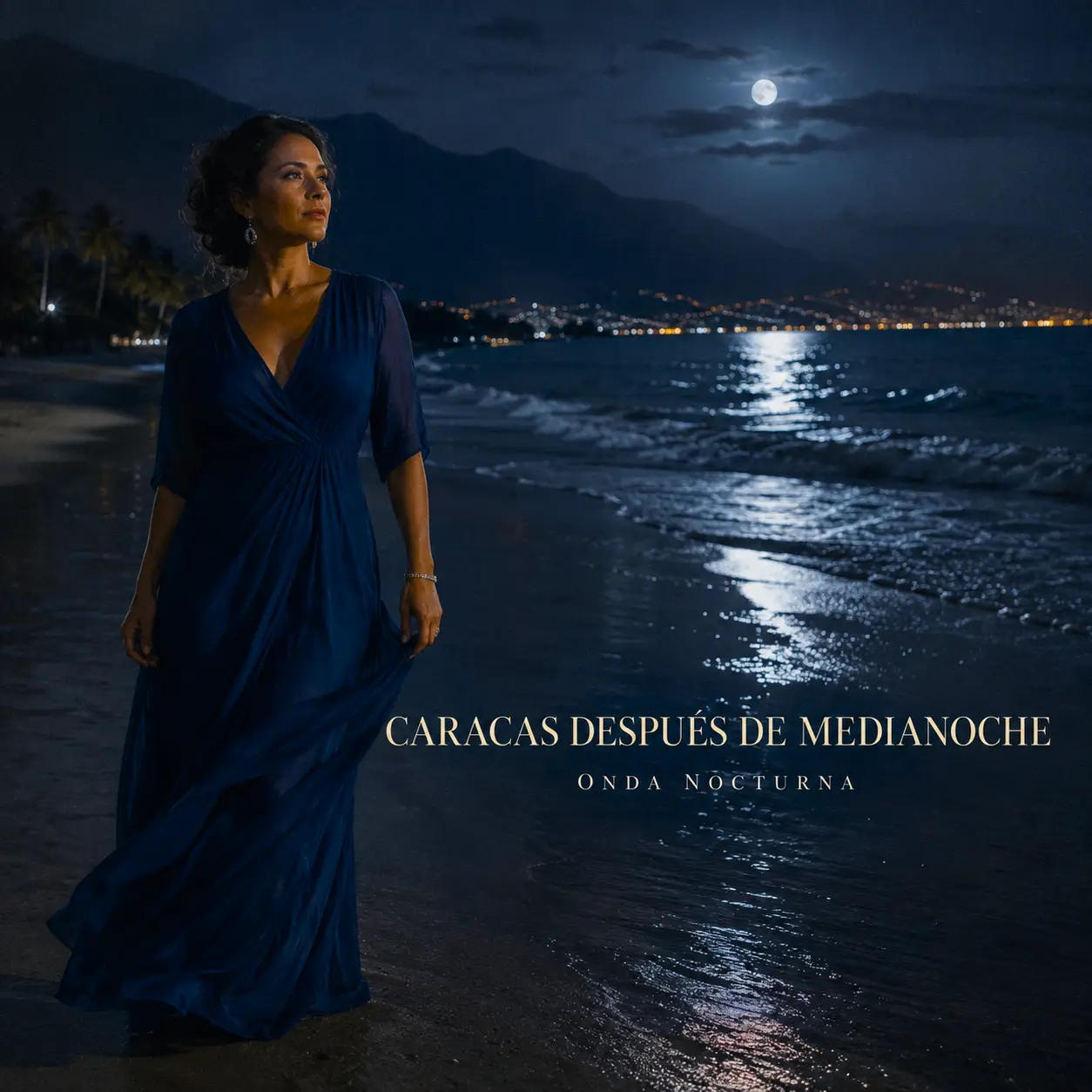
Onda Nocturna
AI Process/Open Source Software: HUMAN, Google Flow Music (Lyria 3.5), Claude.ai, ChatGPT, Perchance.org – DAW: Audacity 4 (alpha), OS: Linux (Ubuntu 26.04)
Caracas Después de Medianoche: Onda Nocturna – Full Album (1:00:47)
There is an hour in Caracas when the traffic finally exhales. The avenidas empty out, the neon signs hum a little softer, and somewhere between the hills and the coast the city stops performing for the day and starts talking to itself. Onda Nocturna, “Night Wave”, is a record made for that hour.
This is not bossa nova borrowing a passport. It shares a language with the sound that drifted north from Rio in the ’60s, the same hushed intimacy, the same unhurried pulse, but the accent here is unmistakably Venezuelan. Listen closely and you’ll hear it: the cuatro slipping in at the edges of a phrase, not as decoration but as a signature, a small four-stringed reminder of where this music actually lives. The rhythmic phrasing bends and breathes differently than its Brazilian cousin, closer to the joropo’s loose-limbed swing than to the strict caress of a bossa strum, even when the guitar is fingerpicking something that sounds, at first, familiar.
The instrumentation stays deliberately intimate. A Rhodes electric piano lays down chords that feel slightly smoked, slightly late, maj7s and 9ths that never quite resolve the way you expect, diminished passing tones that flicker like a streetlight catching a passing car. Underneath, an upright (or fretless) bass moves with the patience of someone who has nowhere else to be. The drums, when they appear at all, arrive as suggestion rather than statement, brushed skins, a soft Latin-jazz lean, occasionally a shaker or a congas figure so restrained it registers more as texture than rhythm. Even the maracas, that most obvious of Venezuelan signifiers, are used almost as a whisper, present, but never announcing themselves.
Tempo-wise, the album lives in that narrow, generous window between 72 and 92 beats per minute, slow enough to think in, fast enough to still call itself music for moving bodies, if only barely. It’s the tempo of a drink being nursed rather than finished, of a conversation trailing off into comfortable silence.
What Onda Nocturna is really after is atmosphere: warm night air, low light, a coastal city that never fully sleeps, the sense of an ocean just beyond the window even when you can’t see it. It’s cocktail-lounge music in the truest sense, built for rooms where people are talking, thinking, or simply letting the night happen around them, but it refuses to be background wallpaper. The harmonic detail rewards close listening even as the surface stays effortless.
Play it after midnight. Let the Rhodes and the cuatro trade the spotlight. Let the city outside your window stand in, for an hour, for Caracas.