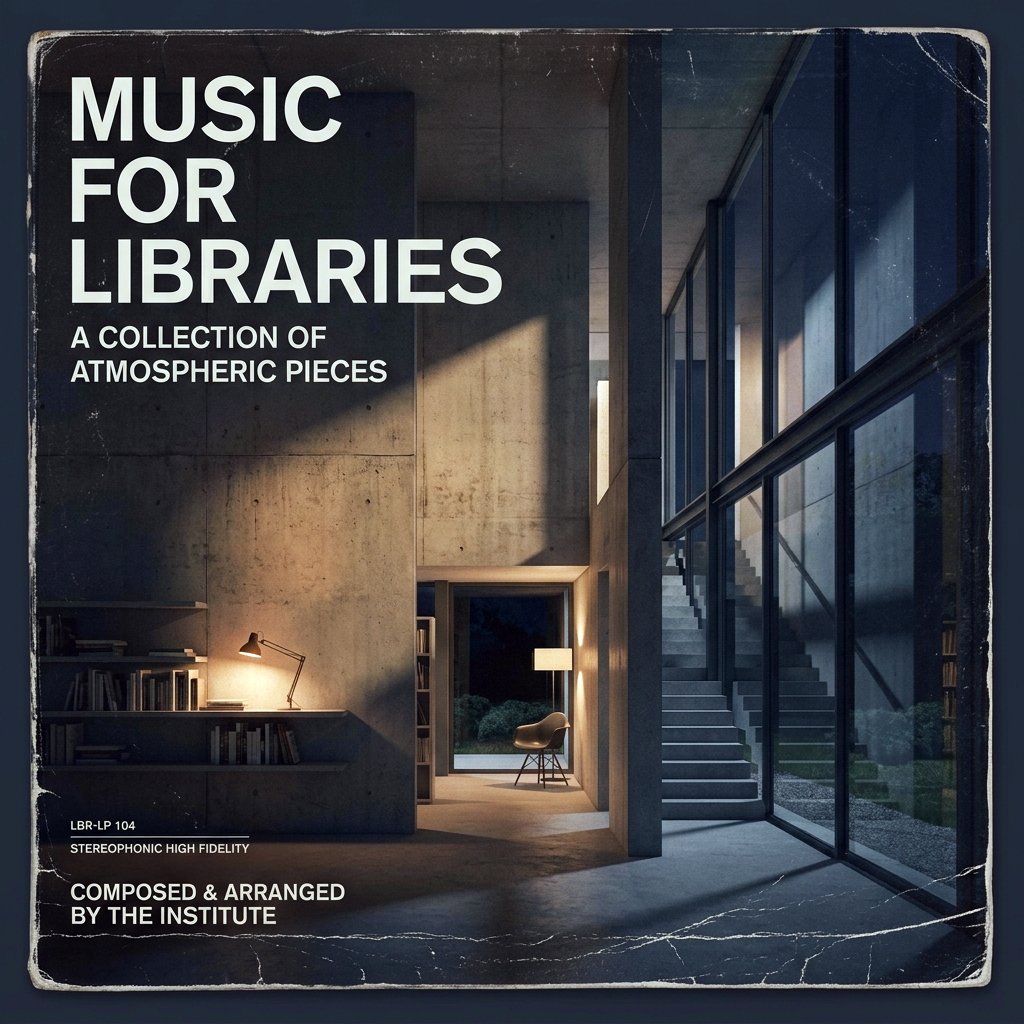
Functional Ambient Soundscapes
AI Process/Open Source Software: HUMAN, Google Flow Music, Claude.ai, ChatGPT – DAW: Audacity 4 (alpha), OS: Linux (Ubuntu 26.04)
Music for Libraries – (22050 Hᴢ @ 112 kbps) 183 Tracks (8:14:09)
Stream/Download Free MP3 Mix (395.9 MB)
Google Deep Dive Podcast: Functional Ambient Soundscapes
Text-to-Music Prompt
Functional Ambient Architecture for public intellectual spaces. Inspired by the emotional philosophy of quiet transit environments and contemplative modernism. Music designed to support concentration, emotional regulation, slow cognition, reading, studying, reflection, and peaceful movement through space. Deeply human, non-cinematic, non-performative, non-commercial feeling. No hooks, no climax, no obvious melody. The music should feel like carefully designed air, light, weather, and architecture inside a large modern library at dusk during light rain.
Ultra-minimal ambient music with warm analog textures, soft harmonic drift, suspended unresolved chords, slow-moving tonal evolution, long decay tails, gentle spatial bloom, subtle tape saturation, and restrained dynamic range. Sparse piano fragments, distant processed chamber instruments, soft bass clarinet textures, muted vibraphone resonance, granular environmental layers, faint electromagnetic hums, softened HVAC ambience, filtered room tone, occasional barely audible page-turn-like textures, and low organic drones. No percussion beyond extremely subtle pulse suggestions. No vocals, no chants, no spoken word.
Emotionally: contemplative, humane, intelligent, emotionally safe, nocturnal, introspective, quietly hopeful, academically sacred, psychologically calming without sounding therapeutic or spa-like. The listener should feel protected from informational chaos. The atmosphere should encourage deep reading and wandering thought. Music for people discovering ideas alone beneath soft lamps.
Architecturally aware sound design. Wide stereo field but unfocused center image. Soft edges. No sharp transients. No bright upper-mid frequencies. Prioritize warm low mids, diffuse reverb clouds, and gentle air frequencies. Extremely low listener fatigue. Designed for long-duration looping in shared public environments.
Pacing should be glacial and patient. 40 to 60 BPM perceived tempo, though rhythm should often disappear entirely. Harmonic changes should emerge slowly like shifting weather through glass. Avoid rhythmic insistence, emotional manipulation, dramatic tension, cinematic crescendos, jazz flourishes, EDM structure, neoclassical sentimentality, or meditation cliché.
Influences in spirit only: generative ambient, environmental music, minimalist electroacoustic composition, restrained modern classical textures, post-war public-space futurism, late-night university architecture, empty terminals, archival rooms, northern winter light, slow elevators, forgotten reading rooms, urban rain after midnight.
Production aesthetic: pristine but slightly aged. Analog warmth without nostalgia fetishism. Modern spatial clarity with subtle imperfections. Feels simultaneously contemporary and timeless. Suitable for libraries, museums, contemplative transit hubs, academic spaces, observatories, and future civic interiors.
Longform immersive structure. Seamless transitions. No obvious beginning or ending. The music should feel as though it has always been playing softly somewhere beyond the walls.