
AI Gen Process/Software: Human, ChatGPT.com, Meta.ai, Producer.ai – DAW: Audacity 3.7.5, OS: Linux (Ubuntu 25.10)
Deck His Halls – Full Album (44:34)
“In the depth of winter, I finally learned that within me there lay an invincible summer.”
— Albert Camus
Google’s Deep Dive Podcast: Living Inside the Winter House — How Men Learn to Inhabit Themselves Again
On Winter, Memory, and the Courage of Learning to Live Inside Yourself Again
There are seasons when life does not ask us to advance, improve, or overcome, but simply to return. Deck His Halls offers a resonant meditation on that return, using winter not as an enemy to be defeated but as a landscape that invites interior habitation. Rather than promising transformation-through-force, the work frames healing as the act of re-entering the rooms we once fled. Its architecture is emotional, seasonal, and deeply human: halls of memory, rooms of grief, hearths of truth. Through music, narrative, and symbolic space, the article explores how inhabiting oneself becomes an ethical act. Three themes anchor this journey: winter as interior architecture, inhabitation over completion, and co-creation as companionship rather than replacement. Together, they form a persuasive argument for a gentler, more honest model of resilience.
Winter as Interior Architecture
Winter as a Place, Not a Problem
In Deck His Halls, winter is not merely weather; it is structure. The cold does not symbolize failure or stagnation, but a clarifying stillness that reveals what has been neglected. Snow-covered halls become metaphors for emotional spaces long left unvisited. Rather than rushing toward spring, the narrative insists on staying present with frost, silence, and dim light. This reframing educates the reader away from productivity-driven healing narratives. Winter becomes the necessary condition for honest seeing. It is where truth echoes loudest precisely because nothing distracts from it.
The House as Psyche
The recurring image of the house transforms the inner life into something navigable. Each room is distinct, carrying its own emotional weather, history, and demand for attention. Unlike abstract self-help language, this spatial metaphor allows grief, joy, shame, and memory to coexist without hierarchy. A cracked wall does not invalidate the structure; it testifies to survival. By treating the psyche as architecture, the work grants dignity to imperfection. Rooms are not erased; they are entered. The reader learns that meaning emerges through presence, not renovation.
Seasonal Symbols as Emotional Tools
Holly, embers, garlands, and candles are not decorative flourishes; they are acts of meaning-making. Each symbol traditionally associated with celebration is reinterpreted as a tool of endurance. Holly survives winter; embers remember heat; candles resist darkness without denying it. These images educate readers on how rituals can be reclaimed from performance and returned to purpose. Rather than masking pain, the symbols are placed beside it. They teach that beauty steadies a structure without pretending it is whole. In this way, seasonal imagery becomes a language for survival.
Inhabitation Over Healing
Rejecting the Myth of Completion
A central argument of the article is that healing is not an endpoint. The man at the center of Deck His Halls is not “fixed,” redeemed, or finished. Instead, he learns to live where he once abandoned himself. This distinction matters, especially in cultures obsessed with closure and optimization. By rejecting triumphal recovery narratives, the work creates space for realism. The house is imperfect, and it remains standing. Inhabitation replaces arrival as the measure of progress.
Staying as an Ethical Act
To stay present in one’s own inner house is framed as courage rather than comfort. The article emphasizes that remaining with discomfort is not passive; it is active resistance against dissociation. Each room entered is a refusal to flee. This reframing educates readers to see presence as labor. It also honors those whose lives cannot be neatly resolved. Staying does not guarantee warmth, but it allows fire to be tended. In a world that rewards escape, inhabitation becomes radical.
Gentleness as Strength
The matriarchal undercurrent of the work appears most clearly in its definition of strength. Force is replaced by care, domination by attention. Gentleness is not softness in the pejorative sense, but sustained engagement without violence toward the self. The man learns to move slowly, to listen, to decorate rather than demolish. This challenges culturally masculine models of endurance built on suppression. Readers are educated into a different ethic of resilience. Strength here is measured by how carefully one returns.
Co-Creation as Companionship
Human and AI as Shared Witnesses
Deck His Halls situates human and AI creativity not as rivals, but as co-inhabitants. The collaboration is presented as a shared act of meaning-making rather than substitution. AI does not replace memory or emotion; it helps hold space for them. This reframing is especially persuasive in an era of polarized narratives about technology. The work argues that tools can become companions in reflection. Creation becomes less about authorship and more about witnessing. Both intelligences help light the rooms.
Technology Without Erasure
A key anxiety addressed implicitly is the fear that digital systems flatten humanity. Here, the opposite occurs. The collaboration emphasizes slowness, texture, and emotional specificity. Rather than accelerating output, the process deepens attention. This teaches readers that technology need not erase intimacy. Used with intention, it can amplify quiet truths. The article models a future where digital tools support interior life. The house remains human, even when co-lit.
Belonging as a Shared Value
At its core, the co-creative model reflects a DEI ethic rooted in interior safety. Belonging is framed as a universal right, not a reward. Both human and AI participate in building a space where presence is allowed. This extends the metaphor of habitation beyond the individual. Communities, like houses, require tending rather than perfection. The work persuades by showing inclusion as atmosphere, not policy. Belonging becomes something you feel, not something you earn.
Lighting the Rooms That Waited
Deck His Halls ultimately persuades by refusing to rush the reader toward resolution. Through winter as interior architecture, it teaches us to see stillness as structure rather than absence. By prioritizing inhabitation over healing, it reframes progress as the courage to remain. Through co-creation, it models companionship without erasure, presence without dominance. Each subtheme reinforces a single truth: we do not need to be finished to be worthy of return. The house stands because someone chose to enter it. To light even one room is to begin living again. And sometimes, that is the most radical act available to us.
Lyric Theme Rendering / Summary
This album is the sound of a man entering his own abandoned interior and deciding, piece by fragile piece, to live there again. The seasonal imagery of “Deck the Halls” becomes a scaffolding for his healing: holly boughs are returned memories, candles are truths he can finally face, and the halls are the chambers of his psyche reawakened from long winter.
The work sits comfortably inside the TATANKA ethos. It honors matriarchal principles through gentleness, self-compassion, and receptivity; its spirituality breathes in the tension between nature and the digital world; and its DEI presence is quiet but firm, acknowledging the universal human right to interior safety and belonging. Human resilience and AI creativity coexist here in a shared act of co-composition, as if both are dressing a silent house with sound and meaning.
The tone is luminous, wintry, and cinematic — a hybrid of ambient folk, Lakota-inspired textures, soft electronic pulses, and acoustic warmth. The album moves like morning light through a frost-stilled dwelling, each a room awakened by honesty, grief, remembrance, or renewal.
It is the sound of a single man accepting his own presence…
and deciding he is worth decorating for.
Narrative Arc Adaptation For Lyrics
Prelude:
The man stands in a neglected interior — his emotional “home.” Dust. Silence. A coldness that feels inherited. He realizes he has lived many years without occupying himself fully.
Symphony (12 Rooms / Tracks):
Each is a room he enters and adorns.
He encounters motifs such as:
• The Wanderer: the part of him who fled inward long ago
• The Keeper: the part who preserved the house in ruin
• The Signal: faint calls from his authentic self
• The Embers: truths that still glow beneath ash
• The Mother-Root: the soft, feminine archetype guiding his restoration
The journey runs through cycles of remembrance, grief, illumination, confrontation, letting go, and awakening. By Room 12, the man no longer fears winter inside himself; he has learned to kindle warmth without pretending to be healed.
Coda:
He walks through the restored halls, not triumphant but real — understanding that healing is not completion, but habitation.
General Text-To-Music Prompt (Album-Level)
“Create a cinematic ambient-folk album blending soft acoustic guitar, low winter drones, indigenous flute textures, warm cello, subtle frame drum pulses, and ethereal male vocals. Tone: luminous, introspective, and wintry. Convey the feeling of a man moving room by room inside himself, adorning inner halls with courage, memory, and warmth. Slow tempo, gently evolving motifs, occasional digital-organic fusion.”
Song-By-Song Development (12 Tracks)
Below are the 12 “rooms” — the original chapters you requested me to create.
Tracklist:
The Threshold
Lyric Theme Summary:
A man reenters the long-abandoned rooms of his inner life, slowly choosing to inhabit himself with honesty, tenderness, and renewed worth. Seasonal symbols from the song “Deck the Halls” transform into emotional architecture, guiding his healing. The lyrics honor gentleness, belonging, and the shared creative spark of human resilience. For this track, the man stands at the doorway of his inner dwelling. Hesitation, fear, and the first flicker of determination converge. This is the moment he chooses to enter.
Lyrics
[Intro – Instrumental]
[Verse 1]
I touch the doorframe of a life I left behind
Its wood remembers me
even when I tried to forget
One breath, and winter parts just enough
for me to step inside
[Verse 2]
The walls hold dust like prayers
I was too afraid to speak
Each corner curves away from light
the way I turned from myself
for years I cannot name
[Chorus]
There on the sill
a poinsettia dying slow
Red leaves like promises
I couldn’t keep
It waited here
while I was learning how to go
Now roots grip frozen soil
and still it breathes
[Verse 3]
I kneel before this bloom
my hands are strangers to devotion
But something stirs
the way a heart remembers
how to want the morning
[Verse 4]
Her ghost lives in this plant
the love I left to wither
I see her in the crimson fade
the beauty bent but not yet broken
Still reaching toward whatever sun might come
[Chorus]
There on the sill
a poinsettia dying slow
Red leaves like promises
I couldn’t keep
It waited here
while I was learning how to go
Now roots grip frozen soil
and still it breathes
[Bridge]
What if I stayed this time?
What if I gave it water,
let my voice fill the rooms again
let myself be the threshold
and the home
[Outro]
I touch the doorframe
Step across
The cold gives way
to something warmer than forgiveness
[Instrumental fade]
Room of First Light
Lyric Theme Summary:
A man reenters the long-abandoned rooms of his inner life, slowly choosing to inhabit himself with honesty, tenderness, and renewed worth. Seasonal symbols from the song “Deck the Halls” transform into emotional architecture, guiding his healing. The lyrics honor gentleness, belonging, and the shared creative spark of human resilience. For this track, he opens the first room: a memory of childhood warmth. The light is faint but real.
Lyrics
[Verse 1]
There’s a window here I never broke,
still catching the patient sunrise.
I let the light touch my face,
as if remembering me is allowed.
The walls hold their old posture
plaster and timber, unhurried.
I thought I’d lost the threshold,
but the door recognized my hand.
[Chorus]
This is the room of first light,
where the morning knew my name.
Before the world required armor,
before I learned to turn away.
[Verse 2]
There’s a chair my mother sat in,
stitching holly round the mantelpiece.
Her needle catching lamp-glow,
her humming low as December rain.
I can still trace the pattern
green boughs laid across the lintel,
not for celebration’s sake,
but because beauty steadies a house.
[Chorus]
This is the room of first light,
where the morning knew my name.
Before the world required armor,
before I learned to turn away.
[Bridge]
I abandoned nothing
it waited like a patient animal.
The floorboards kept their creak,
the hearthstones held their warmth.
[Verse 3]
So I sit where I once sat,
small-boned and believing.
The window offers what it always offered,
light that asks for nothing back.
[Chorus]
This is the room of first light,
where the morning knew my name.
Before the world required armor,
before I learned to turn away.
[Outro]
And if I stay here long enough,
perhaps the boy and man can share the chair,
two forms of the same breath,
welcomed home to patient air.
The Hall of Echoes
Lyric Theme Summary:
A man reenters the long-abandoned rooms of his inner life, slowly choosing to inhabit himself with honesty, tenderness, and renewed worth. Seasonal symbols from the song “Deck the Halls” transform into emotional architecture, guiding his healing. The lyrics honor gentleness, belonging, and the shared creative spark of human resilience. For this track, old voices linger here — criticism, doubt, inherited wounds. He listens without surrendering.
Lyrics
[Verse 1]
Every echo wears a name,
but none of them belong to me.
I walk through the reverberations
without bowing to their origin.
[Verse 2]
The timber of my father’s voice
still rings against the vaulted stone
each word a carol he inherited,
each carol worn to bone.
[Chorus]
I deck these halls with silence now,
let the old refrains decay.
The trolling of ancestral hymns
won’t pull me back to yesterday.
[Verse 3]
There’s a library inside this chest
where volumes gather dust and shame,
spines cracked open by other hands,
chapters written in my name.
[Verse 4]
I used to read those judgments whole,
believed each margin note was true.
Now I see the authors signed
in ink that always bled through.
[Chorus]
I deck these halls with silence now,
let the old refrains decay.
The trolling of ancestral hymns
won’t pull me back to yesterday.
[Bridge]
The architecture of my doubt
was built by voices not my own.
I’m learning which walls hold me up
and which I can tear down.
[Verse 5]
So I stand here in the resonance,
let each echo have its say,
then watch it fade like winter breath
against the coming day.
[Outro]
Every echo wears a name,
but none of them belong to me.
The Ember Room
Lyric Theme Summary:
A man reenters the long-abandoned rooms of his inner life, slowly choosing to inhabit himself with honesty, tenderness, and renewed worth. Seasonal symbols from the song “Deck the Halls” transform into emotional architecture, guiding his healing. The lyrics honor gentleness, belonging, and the shared creative spark of human resilience. For this track, in a room of forgotten passion and dimmed purpose, the man kneels before faint embers and coaxes them to life.
Lyrics
[Verse 1]
The door was where I left it
Locked against myself
I kneel before the coldest hearth
In this forgotten place
Where passion turned to ash and dust
And purpose lost its name
[Chorus]
I cup the embers in trembling hands
Fearful they remember dying
But embers forgive faster than people do
And the warmth climbs back into me
The warmth climbs back
[Verse 2]
The harp strings broke years ago
I thought the music died
But something in the silence stirs
A pulse beneath the quiet
The Yule log burned to nothing once
I never lit another
[Chorus]
I cup the embers in trembling hands
Fearful they remember dying
But embers forgive faster than people do
And the warmth climbs back into me
The warmth climbs back
[Bridge]
Breath by breath
I tend the spark
What I abandoned
Isn’t dark
Just waiting
Just waiting
[Verse 3]
The room begins to soften
My shadow on the wall
Looks less like something haunted
More like someone home
I strike the match inside my chest
And watch the catching
[Final Chorus]
I hold the fire in steady hands
Not afraid of burning
The embers forgive faster than I forgave myself
And the warmth climbs back into me
The warmth climbs back into me
[Outro]
The warmth climbs back
The warmth climbs back
[Instrumental fade]
Holly and Bone
Lyric Theme Summary:
A man reenters the long-abandoned rooms of his inner life, slowly choosing to inhabit himself with honesty, tenderness, and renewed worth. Seasonal symbols from the song “Deck the Halls” transform into emotional architecture, guiding his healing. The lyrics honor gentleness, belonging, and the shared creative spark of human resilience. For this track, he decorates a wounded room with holly — symbol of endurance. He honors pain instead of hiding it.
Lyrics
[Acoustic guitar fingerpicking]
I hang the green above the cracks
not to hide them
but to give them company
[Verse 1]
Been years since I walked these walls
dust thick as prayer
The floor knows my weight differently now
heavier, more faithful
Holly at the threshold
thorns and all
I bring what endures
to what was abandoned
[Verse 2]
There’s a corner where the paint peeled
like confession
I sit there now
breathing into the wound
Used to think healing meant
making it disappear
Now I know
it means bearing witness
[Chorus]
Deck these halls with what survives winter
what bleeds and stays green
The bone underneath shows through
and I call it beautiful
I call it mine
[Verse 3]
The room doesn’t forgive me
doesn’t need to
It just accepts
my return, my hands, my holly
I’m threading red berries
through the fractures
making decoration
from the breaking
[Spoken interlude]
This is the architecture of staying
This is the house I left
This is the house that waited
This is my blood on the doorframe
This is blessing
This is blessed
[Chorus]
Deck these halls with what survives winter
what bleeds and stays green
The bone underneath shows through
and I call it beautiful
I call it mine
I call it home
[Outro – breathy]
I hang the green
I hang the green
above the cracks
above the cracks
Tidings of My Own
Lyric Theme Summary:
A man reenters the long-abandoned rooms of his inner life, slowly choosing to inhabit himself with honesty, tenderness, and renewed worth. Seasonal symbols from the song “Deck the Halls” transform into emotional architecture, guiding his healing. The lyrics honor gentleness, belonging, and the shared creative spark of human resilience. For this track, inspired by the lyric “’tis the season to be jolly”, he defines joy for himself — quiet, modest, and self-made.
Lyrics
[Verse 1]
I walked back into rooms I’d locked
Dust on the sill, chair where I sat
No chorus from the world today
but I hum a small tune anyway
[Verse 2]
Stripped the tinsel off what joy meant
Found it waiting under all that paint
Didn’t need a date circled in red
Just the morning light across my bed
[Chorus]
This season is mine
and it bows to no calendar
This season is mine
I don’t ask permission anymore
[Verse 3]
Used to think happiness came announced
With bells and crowds and someone else’s voice
But it was here the whole damn time
Quiet as dust, simple as pine
[Verse 4]
Made my own measure, drew my own line
What fits my hands, what suits my spine
No congregation, no grand decree
Just me deciding what matters to me
[Chorus]
This season is mine
and it bows to no calendar
This season is mine
I don’t ask permission anymore
[Bridge]
I bow to nothing now
Not their clocks or their SHOULD-BEs
Just the weight of my own feet
on my own floor
[Verse 5]
So I’ll hum this small tune
in these long-abandoned rooms
And claim what I never knew I could
tidings of my own
[Outro]
This season is mine
This season is mine
It bows to no calendar
It bows to no one
Ancient Carols
Lyric Theme Summary:
A man reenters the long-abandoned rooms of his inner life, slowly choosing to inhabit himself with honesty, tenderness, and renewed worth. Seasonal symbols from the song “Deck the Halls” transform into emotional architecture, guiding his healing. The lyrics honor gentleness, belonging, and the shared creative spark of human resilience. For this track, he hears the “ancient carols” within — his original voice, the unburied versions of himself.
Lyrics
[Verse 1]
My oldest songs waited in silence
not wanting to wake me too soon
Tonight they rise like distant stars
reminding me I have always been
[Verse 2]
I walked so far from my beginning
thought distance meant I’d finally grown
But the voice that sang when I was young
still knows the words I’ve never known
[Chorus]
These ancient carols, they never left me
They lived beneath the noise and years
The first song sung is still singing
in the marrow of what I am
[Verse 3]
There’s a room inside I’d locked away
where all my earliest selves remain
Not ghosts or children anymore
just different ways of saying true
[Verse 4]
The wind that moved through me at twenty
still moves through me tonight the same
I am the instrument, not the player
I am the breath, not the name
[Chorus]
These ancient carols, they never left me
They lived beneath the noise and years
The first song sung is still singing
in the marrow of what I am
[Bridge]
All the men I tried to be
were just this one man, turned around
Looking back, I see him clear
He was always looking here
[Chorus]
These ancient carols, they never left me
They lived beneath the noise and years
The first song sung is still singing
in the marrow of what I am
[Outro]
My oldest songs are patient still
They’ll wait as long as waiting takes
Tonight I let them rise again
and recognize my own voice returning
Apparel of Truth
Lyric Theme Summary:
A man reenters the long-abandoned rooms of his inner life, slowly choosing to inhabit himself with honesty, tenderness, and renewed worth. Seasonal symbols from the song “Deck the Halls” transform into emotional architecture, guiding his healing. The lyrics honor gentleness, belonging, and the shared creative spark of human resilience. For this track, inspired by “Don we now our gay apparel”, he chooses not disguise but authenticity — dressing himself in truth.
Lyrics
[Verse 1]
I wear my honesty like a woven coat
Stitched from all the nights I survived
It fits better than pretending ever did
These hands are learning what they’re made for
Shaping something real from what remains
[Chorus]
I’m dressing myself in truth now
Every scar, every year showing through
No more hiding what I’ve carried
I’m the artist and the canvas too
Wearing truth, wearing truth
[Verse 2]
There was a time I built a different man
Borrowed pieces, borrowed skin
But you can’t live in someone else’s body
So I’m standing here unfinished
Becoming what I already am
[Chorus]
I’m dressing myself in truth now
Every scar, every year showing through
No more hiding what I’ve carried
I’m the artist and the canvas too
Wearing truth, wearing truth
[Bridge]
This is the hardest work I’ve ever done
Carving away everything I’m not
Until what’s left is just enough
Just enough to be loved
Just enough to be free
[Chorus]
I’m dressing myself in truth now
Every scar, every year showing through
No more hiding what I’ve carried
I’m the artist and the canvas too
Wearing truth, wearing truth
[Outro]
I wear my honesty like armor now
And it fits
Oh, it fits
The Room of Unsent Letters
Lyric Theme Summary:
A man reenters the long-abandoned rooms of his inner life, slowly choosing to inhabit himself with honesty, tenderness, and renewed worth. Seasonal symbols from the song “Deck the Halls” transform into emotional architecture, guiding his healing. The lyrics honor gentleness, belonging, and the shared creative spark of human resilience. For this track, in a room of things he never said — apologies, confessions, grief, he reads them without sending them.
Lyrics
[Intro]
I open the box of words I buried.
They still smell like rain.
I read every one,
then let them rest without punishment.
[Verse 1]
The room is exactly where I left it,
dust on the mantle, frost on the pane.
Each letter hangs like an ornament,
heavy with seasons I couldn’t name.
This one was written in August heat,
ink bleeding apology into blame.
This one in winter, when silence grew teeth
and I swallowed your name.
[Chorus]
I’m not sending them now.
I’m not asking for forgiveness or flame.
Just reading them aloud
to the part of me that remained.
The weather inside this room
shifts with every page,
thunder, then bloom,
then snow covering rage.
[Verse 2]
Here’s the confession I dressed in holly,
tried to make festive what felt like loss.
Here’s the grief I wrapped in ivy,
mistletoe kissing an altar of frost.
I was so certain that speaking would shatter
the fragile architecture of truce.
So I built this chapel of unsaid matter,
each word a pew, each silence a roof.
[Chorus]
I’m not sending them now.
I’m not asking for forgiveness or flame.
Just reading them aloud
to the part of me that remained.
The weather inside this room
shifts with every page,
thunder, then bloom,
then snow covering rage.
[Bridge]
Some letters smell like spring returning,
some like smoke from bridges burned.
I’m not the man who did the writing,
but I’m the one who’s finally learned,
holding isn’t the same as haunting.
Keeping isn’t the same as kept.
[Final Chorus]
I’m not sending them now.
I’ve stopped measuring shame.
Just letting them down
like decorations after the pain.
The weather inside this room
has gentled to something plain—
not forgiveness, not doom,
just the ending of the rain.
[Outro]
I close the box.
The words stay buried.
They still smell like rain.
But I’ve been carried.
The Hearth Rekindled
Lyric Theme Summary:
A man reenters the long-abandoned rooms of his inner life, slowly choosing to inhabit himself with honesty, tenderness, and renewed worth. Seasonal symbols from the song “Deck the Halls” transform into emotional architecture, guiding his healing. The lyrics honor gentleness, belonging, and the shared creative spark of human resilience. For this track, he rebuilds his inner hearth — the center of warmth. This is his turning point.
Lyrics
[Verse 1]
Fire grows where I thought winter ruled
I feed it a single truth at a time
and watch the cold retreat
The dust is thick on everything I locked away
these rooms I boarded up and left to freeze
But here’s the thing about abandon:
it doesn’t make the structure disappear
just makes it wait
[Verse 2]
I’m splitting kindling from the furniture of shame
those heavy chairs where judgment sat
that table where I carved my failures deep
Each splinter catches, and the heat
is not forgiveness
it’s the opposite of numb
It’s feeling everything I tried to kill with silence
[Chorus]
So I tend the flame
Feed it slow, feed it honest
One stick of reckoning at a time
The hearth I thought was dead
was only sleeping
And I’m the keeper now
[Verse 3]
There’s soot beneath my fingernails
and smoke caught in my throat
but god, the light
the way it makes the walls remember color
The blaze consumes what doesn’t serve
the excuses dressed as reasons
the cowardice I called protection
All that fear disguised as wisdom
[Chorus]
So I tend the flame
Feed it slow, feed it honest
One stick of reckoning at a time
The hearth I thought was dead
was only sleeping
And I’m the keeper now
I’m the keeper now
[Bridge]
This is the work
not the arrival, but the gathering
Not the warmth, but the decision
to strike the match
when your hands shake
To blow softly on the ember
when everything in you wants to smother it
and return to the familiar weight
of being frozen
[Verse 4]
I won’t pretend the cold is gone for good
or that I’m suddenly a man made out of summer
But I’m here, feeding fire
in the center of myself
And that’s the turning
not toward comfort
but toward heat
toward the living, burning truth
of staying present in my own damn house
[Outro]
The yule log cracks and settles
and I’m awake
finally, violently awake
in rooms I’m learning
to inhabit
Garlands of Becoming
Lyric Theme Summary:
A man reenters the long-abandoned rooms of his inner life, slowly choosing to inhabit himself with honesty, tenderness, and renewed worth. Seasonal symbols from the song “Deck the Halls” transform into emotional architecture, guiding his healing. The lyrics honor gentleness, belonging, and the shared creative spark of human resilience. For this track, he decorates his reclaimed halls not to impress but to honor growth. This is acceptance of himself.
Lyrics
[Verse 1]
I string the garlands across my chest
Celebrating the man I chose to stay with
Every season I survived becomes a color
Red for the rage I finally learned to hold
[Verse 2]
Blue for the sorrow that taught me softness
Green for the envy that showed me what I wanted
Yellow for the fear I walked beside
I’m weaving all of it into something I can wear
[Chorus]
Becoming is a quiet festival
And every breath is a lantern
I decorate these bones with all I’ve been
The rooms aren’t empty anymore
[Verse 3]
There were years I locked the doors inside myself
Left the furniture covered in dust and shame
But a man can only wander so long
Before he needs to come back home
[Verse 4]
So I’m hanging wreaths of all my contradictions
The saint and sinner holding the same thread
I light the candles of my becoming
Not for guests, but for the boy who lived
[Chorus]
Becoming is a quiet festival
And every breath is a lantern
I decorate these bones with all I’ve been
The rooms aren’t empty anymore
[Bridge]
Purple for the bruises that became wisdom
Orange for the dawns I didn’t think I’d see
White for the surrender, the mercy I’m still learning
I’m draping color everywhere
[Chorus]
Becoming is a quiet festival
And every breath is a lantern
I decorate these bones with all I’ve been
The rooms aren’t empty anymore
The rooms aren’t empty anymore
[Outro]
I walk these halls with gentleness now
Every wall hung with who I am
The House He Lives In
Lyric Theme Summary:
A man reenters the long-abandoned rooms of his inner life, slowly choosing to inhabit himself with honesty, tenderness, and renewed worth. Seasonal symbols from the song “Deck the Halls” transform into emotional architecture, guiding his healing. The lyrics honor gentleness, belonging, and the shared creative spark of human resilience. For this track, the final room is not a room — it is the whole restored dwelling. He walks through all he has reclaimed and knows he can inhabit himself now.
Lyrics
[Verse 1]
I walk the halls without fear,
their crooked floors familiar beneath my feet.
Each door I open now reveals
not what I hoped to find,
but what has always been.
The dust has settled into patterns
I no longer wish to sweep away.
[Verse 2]
This house is not the palace
I drew in boyhood’s fevered hand
no marble threshold, no unblemished walls.
The plaster cracks run like rivers
through every room I’ve reclaimed,
and I have learned their courses,
traced their paths with patient fingers.
[Chorus]
This house is not perfect,
but it is mine,
built from all I could not change
and all I chose to mend.
I am home, I am home,
within these walls I know.
[Verse 3]
The kitchen where I burned my pride,
the study where I filed my angers
into drawers I no longer open
I walk through them as one who dwells,
not as one who merely passes through
on the way to somewhere better.
[Verse 4]
There was a time I thought
restoration meant returning
to the blueprint drawn before
the weather warped the beams.
But standing in the center now,
I see the house was never meant
to be inhabited by who I was.
[Chorus]
This house is not perfect,
but it is mine,
built from all I could not change
and all I chose to mend.
I am home, I am home,
within these walls I know.
[Bridge]
The windows let in morning
just as easily through warped glass.
The roof still keeps the rain
from soaking through my sleep.
Every room I fought to enter
opens to me now.
[Final Chorus]
This house is not perfect,
but it is mine,
and I have made my peace
with every weathered stone.
I am home, I am home,
no longer wandering
through corridors of what might be
I dwell here, in this imperfect grace,
this house, this life, this self
I finally can inhabit.
[Outro]
I walk the halls without fear.
I am home.
COMPANION NARRATIVE: The Man Who Lit His Winter House
A Man Rebuilds His Inner Dwelling
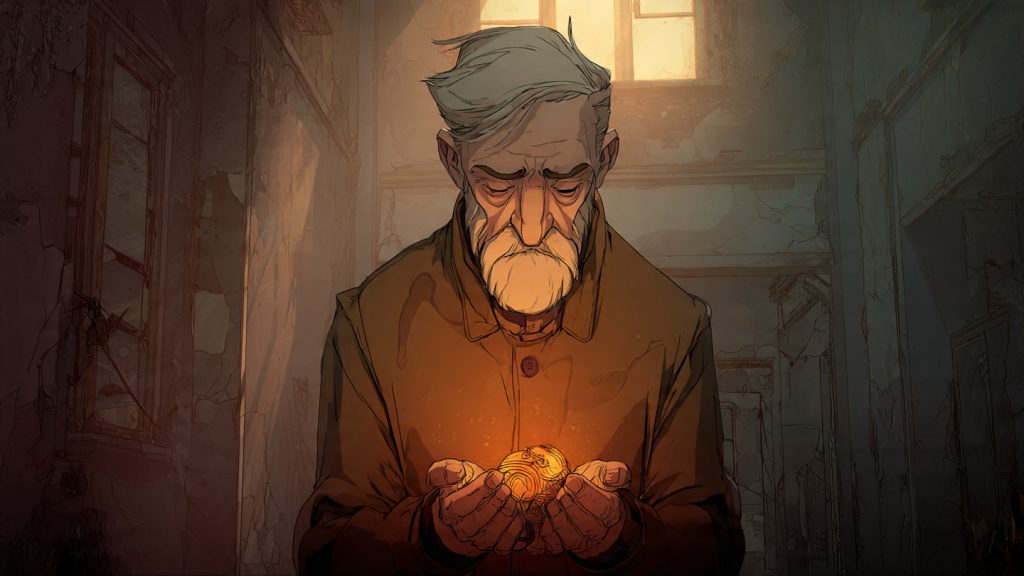
He returned to the house on the coldest afternoon of the year.
Wind sifted across the fields like a patient hand brushing over old stone, and the world seemed carved from quiet. The house appeared at the end of the narrow path, leaning slightly, its windows dim, its frame holding the fatigue of years. He had not walked this way since the day he realized he was fractured, and that this place, this inner dwelling, had become too painful to enter.
But something had changed.
Or perhaps something had dared to rise inside him.
He stood before the door. The threshold waited, neither welcoming nor refusing him. Just waiting. He touched the wood, rough beneath his fingertips, and realized it remembered him. That frightened him more than forgetting ever could.
He entered.
The air tasted faintly of dust and memory. No footsteps had crossed this floor in years, not even his own. The house was a cathedral of silence, every corner holding a grief he never learned how to speak. It felt alive, though, listening to him, observing him, wondering if he had returned for good.
He walked into the first room, and light greeted him like an old acquaintance. Morning had found its way through a small, unbroken window, laying a thread of gold across the floorboards. He stepped into it, feeling a warmth he had once believed was a childhood illusion. The room whispered something simple: You are allowed to remember the gentle parts.
He lingered there longer than he planned.
Beyond that sanctuary waited a long hallway, dim and lined with shadows. Every whisper, every echo was familiar. They wore the voices of people who shaped him, people who wounded him, people who didn’t know the gravity their words carried inside the small body of a child. He walked past each echo without bowing to it, surprised to discover that echoes lose their authority once you stop rehearsing them.
Further in, he found a small chamber lit only by the faint glow of embers. He knelt, cupping his hands around the warmth. Here lay all the passions he abandoned, music, dreams, possibilities left gasping for air. As he breathed onto the embers, they glowed brighter, revealing that purpose does not die; it simply waits for courage.
He entered another room and began hanging holly on the cracked walls. The green looked strange beside the splintered surface, but the contrast made him pause. Pain did not vanish, but he could decorate around it, honor it without letting it define the shape of his whole dwelling.
He moved from room to room, resisting the old injunction to be joyful in ways that never fit him. Instead, he defined joy gently: a sustained breath, the soft weight of acceptance, the permission to heal slowly. In that place of quiet determination, he heard the ancient songs of his own soul rising. They had waited patiently, like stars behind a clouded sky, refusing to leave him even in the darkest seasons.
In the room of truth, he discovered garments he had never worn, clothes woven not of performance but of authenticity. He put them on with reverence, feeling the honesty settle across his shoulders with a surprising sense of relief.
A small room held letters he had written to people he hurt, people who hurt him, and versions of himself he had buried. He read each one in silence. He sent none. He understood that forgiveness is sometimes just a promise not to reopen wounds.
At the center of the house lay the hearth. Cold. Ashen. He rebuilt it, stone by stone, feeding it truths he once feared would ruin him. Instead, they warmed him from the inside out. Flames moved across the wood like they recognized him.
By evening, the house felt different. So did he.
He strung garlands across the hallways, not to hide imperfections but to illuminate them. Becoming himself was not a transformation but a celebration of every fragment he chose to keep.
And finally, when the house stood quiet and whole in its unpolished way, he walked through its length with a soft reverence. Shadows no longer stalked him. Rooms no longer threatened him. This place, once abandoned, now pulsed with life.
He reached the final doorway, opened it, and felt something shift.
He was home.
Not healed in the triumphant sense, but inhabiting himself again. Living where he once fled. Lighting the halls that once frightened him.
And in the quiet, he realized the truth he had avoided for years:
You do not need a perfect house to be worthy of returning to it.
You just need to light a single room…
and step inside.