Ukucathama
AI Process/Open Source Software: HUMAN, Google Flow Music (Lyria 3.5), Claude.ai, ChatGPT, Perchance.org – DAW: Audacity 4 (alpha), OS: Linux (Ubuntu 26.04)
Ukucathama, a noun form of the verb cathama, meaning “to walk softly,” “to tread carefully,” or “to move stealthily/quietly.” It’s the same root word that gives isicathamiya its name. As an album title it does double duty. It names the vocal tradition itself, and it describes the act of the record, something sung carefully, quietly, so as not to disturb.
Amaphupho Ebusuku, “Dreams of the Night” / “Night Dreams.” Paired as a subtitle, it locates the album in that late, hushed, half-awake register the music lives in, ambient’s spaciousness as a kind of dream-space, isicathamiya’s history as night-singing in hostel rooms.
Together: Ukucathama: Amaphupho Ebusuku, roughly, “Treading Softly: Night Dreams.”
Isicathamiya + Soul/R&B/Ambient fusion, a natural pairing, the lyrics and vocals in isiZulu, sung by a breathy Zulu woman of South Africa, with soft, layered female vocal harmonies and gentle call-and-response of isicathamiya, sharing musical and vocal DNA with neo-soul and R&B vocal stacking (think of how backing vocals are arranged in artists like Sampha or Moses Sumney).
Its hushed, meditative quality, sung quietly so as not to wake people, also blends beautifully with Ambient music’s spaciousness.
This is essentially what happened when Ladysmith Black Mambazo worked with Paul Simon on Graceland, and more recent artists have continued that thread by layering isicathamiya-style harmonies over softer electronic or soul production.
Where The Silence Started
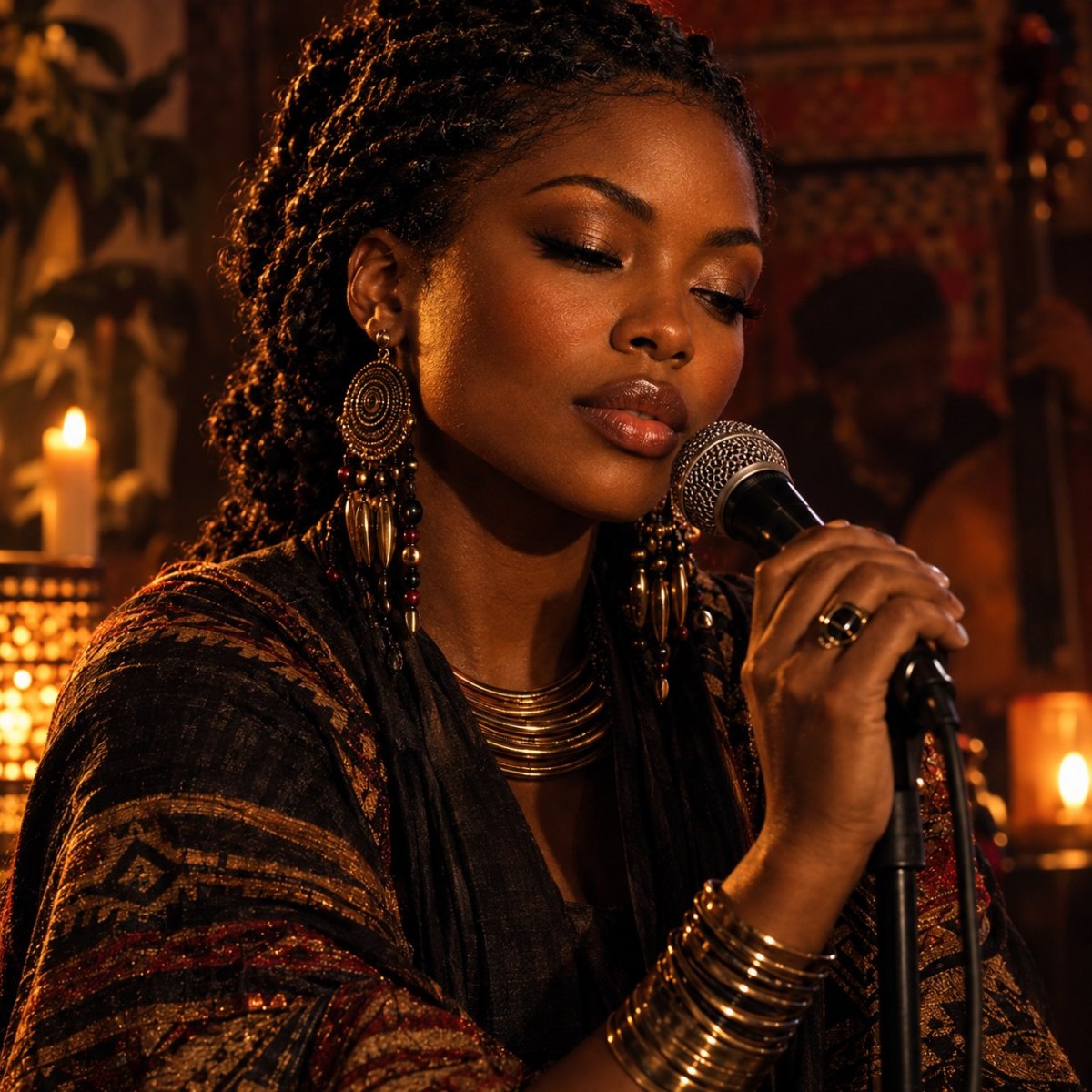
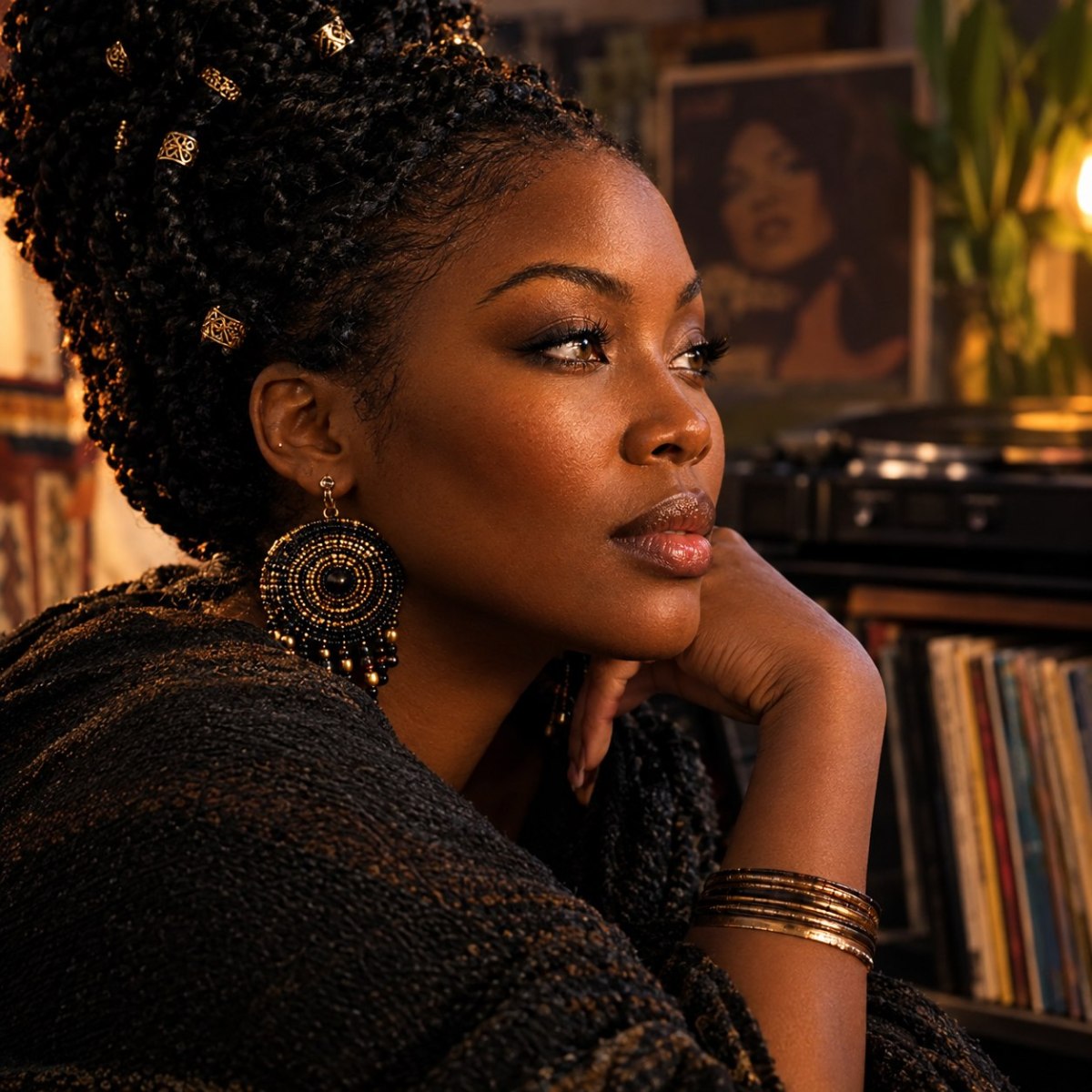
ntoko was born Ntokozo Mkhize in Ladysmith, KwaZulu-Natal, the town that gave the world Ladysmith Black Mambazo, and the hostels where isicathamiya first learned to move like a whisper. She grew up in a house that never stopped singing, though it rarely sang loudly. Her grandmother led a women’s isicathamiya-adjacent church choir that rehearsed in the front room on Thursday nights, four-part harmony folded down small enough to fit inside a house with sleeping children in it. Her father kept a quieter, smuggled archive. Motown pressings and early Sade brought home from Johannesburg, the first Blue Note records he could get his hands on, played after the choir had gone home and the house had gone dark.
She has said she learned harmony from the choir and learned space from the records, two educations running side by side, both taught in the same low volume.
Learning To Disappear Into Sound
She trained for two years in classical voice in Durban, then left the conservatory for something less official: backing vocals on gospel and mbube sessions across the province, singing in the corner of small rooms so as not to overpower the lead. It was unglamorous, exacting work, the discipline of blending so tightly with three other voices that the harmony reads as a single held breath. That discipline became her instrument. Every solo record she would go on to make is, structurally, still a backing-vocal session, just one where she finally stepped into the space she used to leave empty for someone else.
In her mid-twenties she moved to Cape Town and started sitting in on electronic and neo-soul sessions, hearing her hostel-taught harmonies against synthesizers and sparse low end for the first time. She began stacking her own voice, sometimes twenty takes deep, into structures no choir would need her to shrink for. The hush stayed. Only the room got bigger.
The Record She Was Already Inside
Ukucathama: Amaphupho Ebusuku is what happens when a woman who spent a decade learning to sing quietly finally writes the lead line. Isicathamiya’s call-and-response sits inside ambient’s open air; her stacked harmonies do the work a synth pad might do elsewhere, breathing under a lead vocal sung just above a whisper, night-singing, the way isicathamiya was built to be sung in hostel rooms where waking someone was the one unforgivable sound. The album doesn’t perform South African tradition for an outside listener. It just keeps doing, at 3 a.m. volume, what her grandmother’s choir was already doing on Thursday nights.
Isicathamiya was already meant to be sung quietly, in the dark, so you wouldn’t wake anyone. I just found the music that was already waiting there in that silence.
— ntoko
Isolate any single track and you can hear the whole lineage stacked inside it. A choir’s discipline, a session singer’s restraint, a producer’s patience with silence. Put the record on at the volume it asks for, low, close, half-lit, and it stops sounding like a genre exercise and starts sounding like the only way this music could have ever been made.
What She’s Building Next
ntoko talks about her debut as a room she built to be quiet in, and about the next one as a room she wants to open a window in. She’s already sketching a second record built around collaboration rather than solitude. Sessions with mbube choirs from the same hostel lineages her grandmother sang in, and conversations with producers working the same hushed, harmony-stacked terrain from the other side of neo-soul and ambient R&B. Where the debut was assembled largely alone, layer by layer, the follow-up is shaping up as a record made in rooms full of other voices, the choir she grew up watching, brought back into a session she’s now leading.
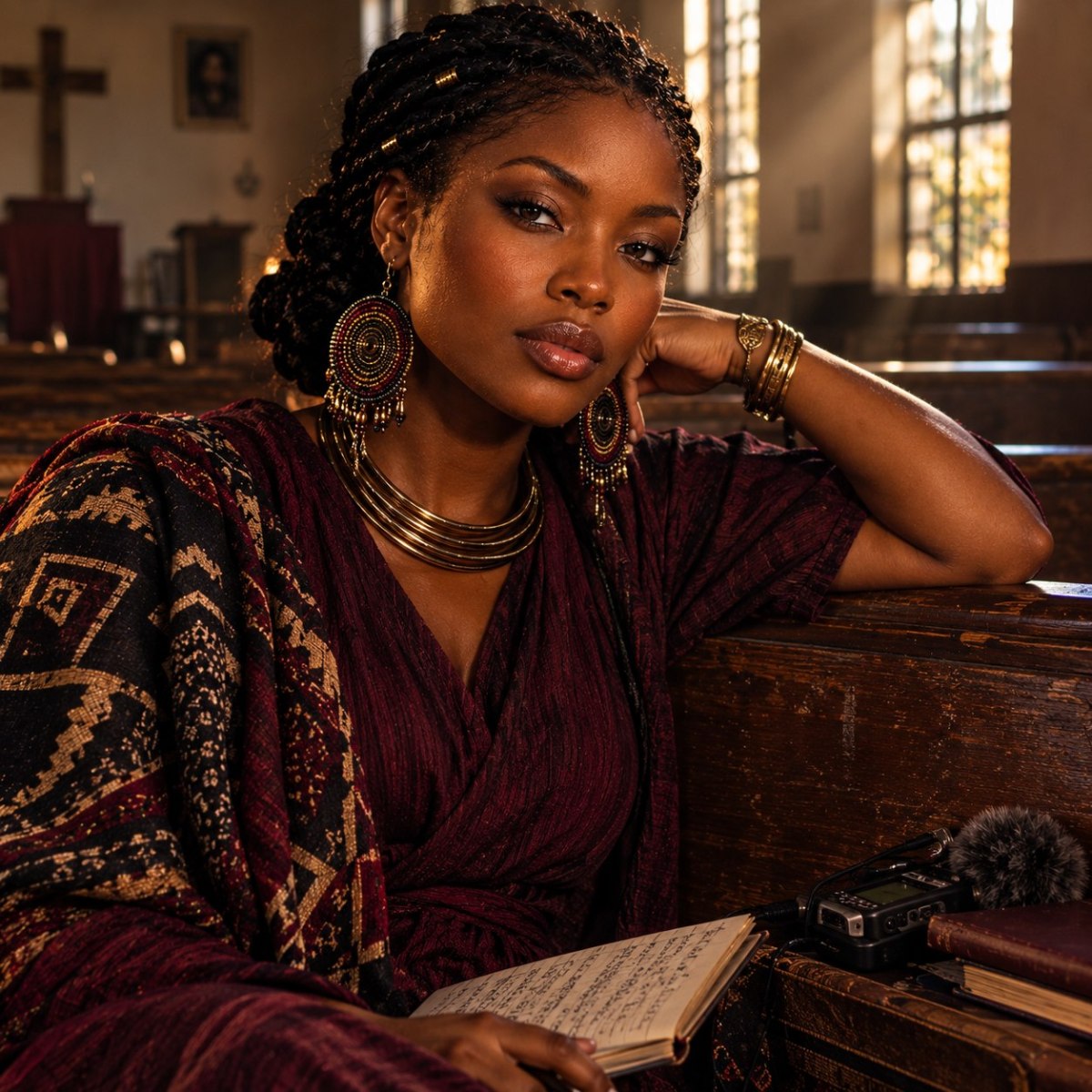
Off the record, she’s begun laying groundwork for what she calls, informally, an archive project, recording and preserving the older isicathamiya and mbube choirs still rehearsing in KwaZulu-Natal hostels and churches, the kind of Thursday-night sessions that raised her and that rarely get documented before they disappear. A short companion film, built around the album and shot partly back in Ladysmith, is also in early stages, less a music video than a document of the rooms this music actually comes from.
Live, she’s kept things deliberately small… so far. Intimate, late, seated shows where a full band would drown out exactly the thing the songs are built around. As the album finds its audience, expect that to widen carefully, bigger rooms, still built for a whisper.
ntoko isn’t asking you to discover a new sound.
She’s asking you to lean in close to hear the one already there.
She’s simply waiting for us to stop shouting over it.
Listen… to ntoko.
The Drum Remembers is a free, six-track instrumental EP released for Indigenous Peoples’ Day 2026,…
Dirt & Diesel is a free 21-track country rap album where backroad storytelling collides with…
The Body Leaves A Color is a free, nine-track ambient neo-soul and bedroom R&B album…
The Forest Remembers is a free 69-minute instrumental album of Baltic ritual electronica. A haunting…
Resonance & Squelch is 283 tracks and 13 hours 39 minutes of hypnotic, instrumental acid…
Bridges Without Names is a free seven-track Plains folk-ambient album with vocals, a tribute to…